


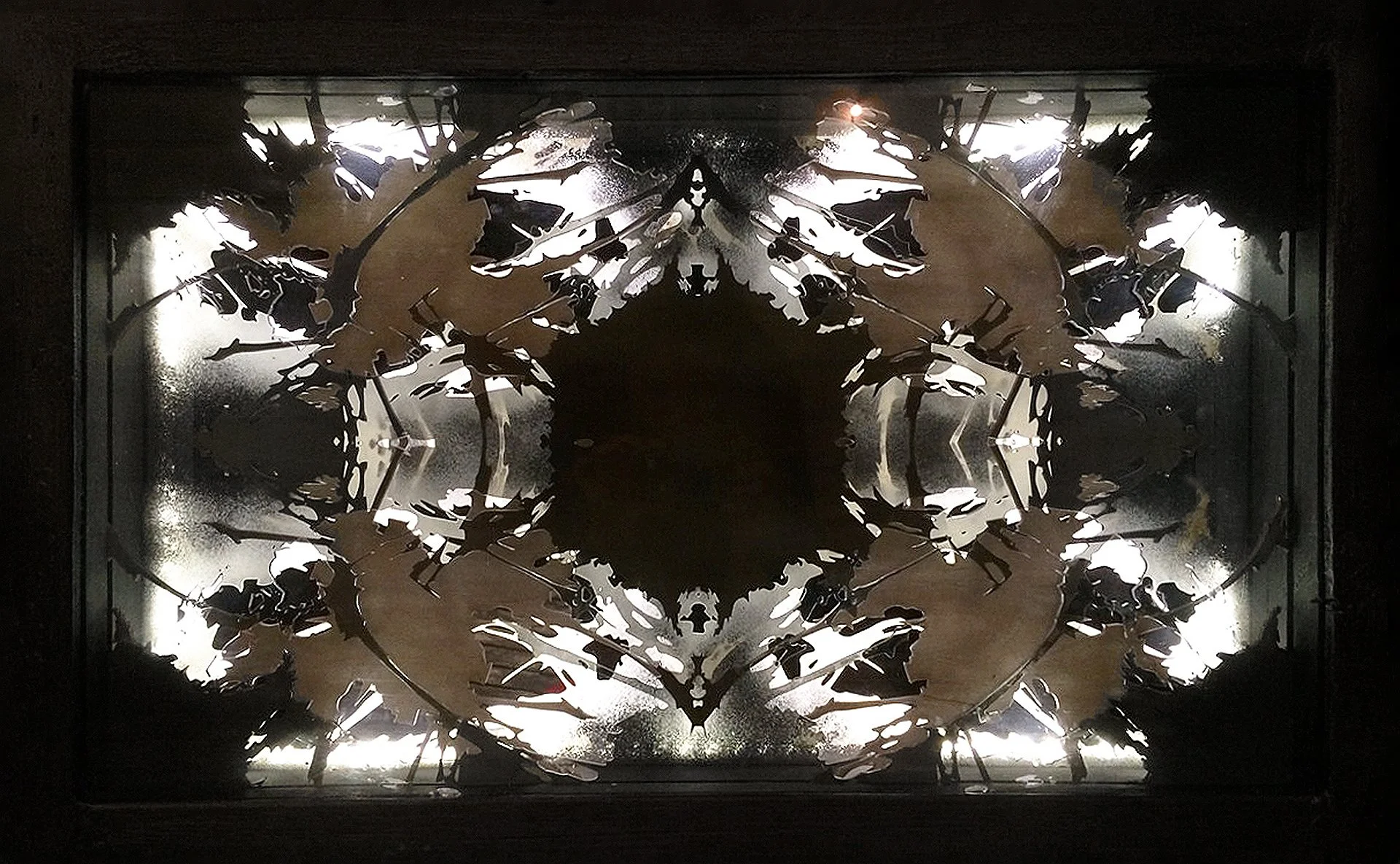
Andrea de Leon’s work delves into a “quantum neurosis”—a tension between perception and reality, where the boundaries between internal states and external form begin to destabilize. The materials are transformed through heat and force using processes that require both precision, chaos, and surrender. Within these conditions light operates as both a structural and perceptual element, bending through forms to disrupt a fixed understanding of presence.

The work engages a cerebral landscape for viewers to navigate. Rather than presenting a fixed meaning, the sculptures act as reflective surfaces—a metaphysical lens through which the fragile boundaries of the self come into focus.
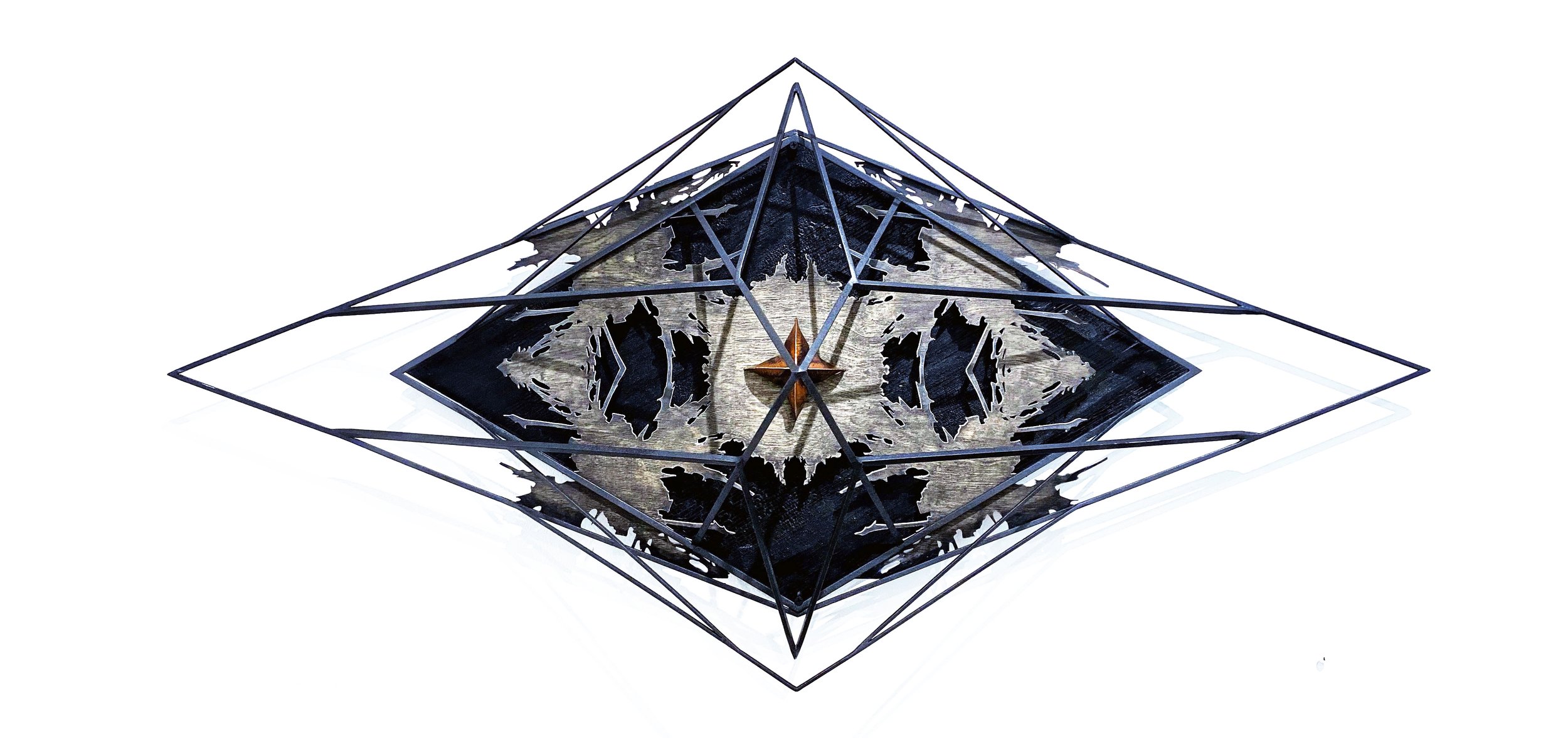
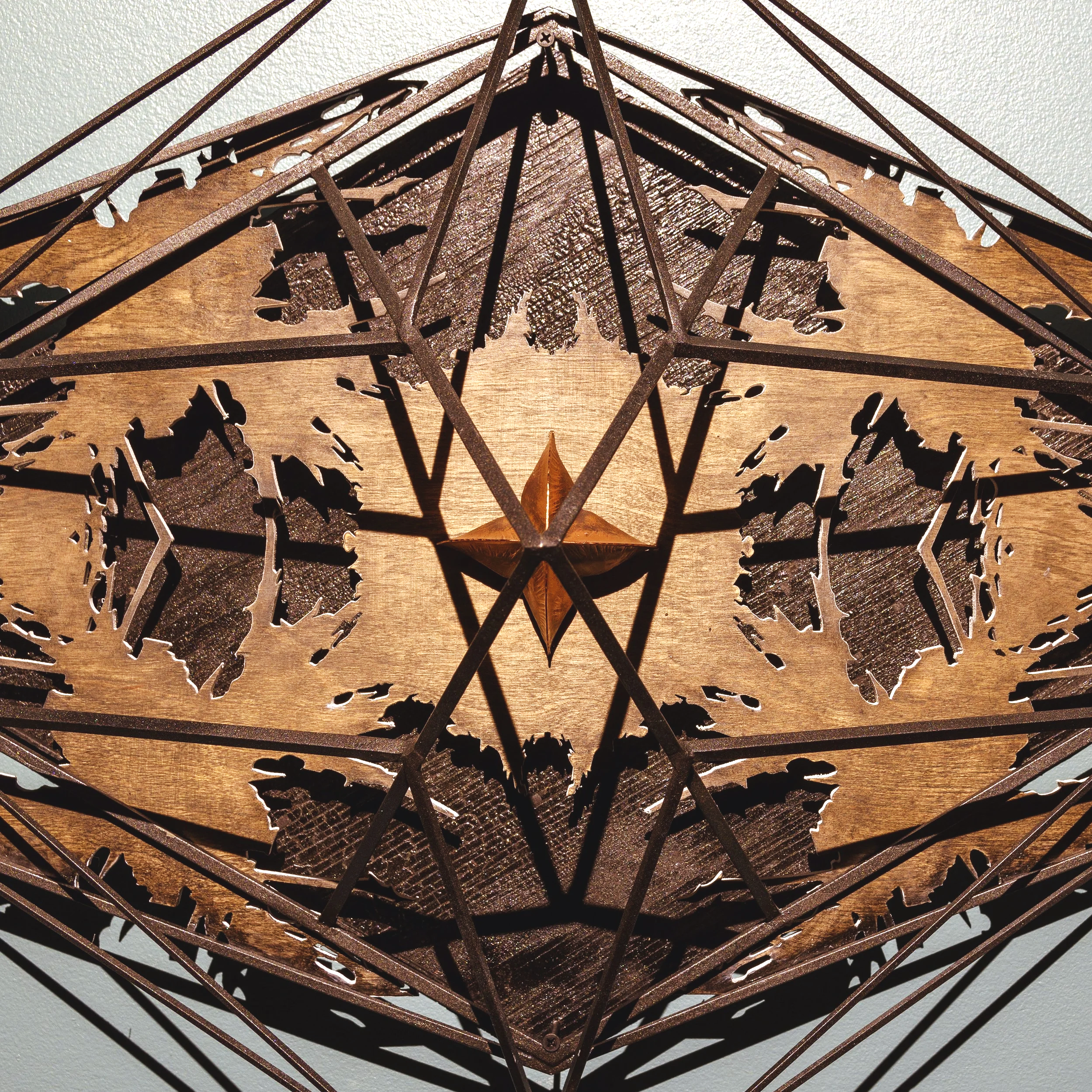
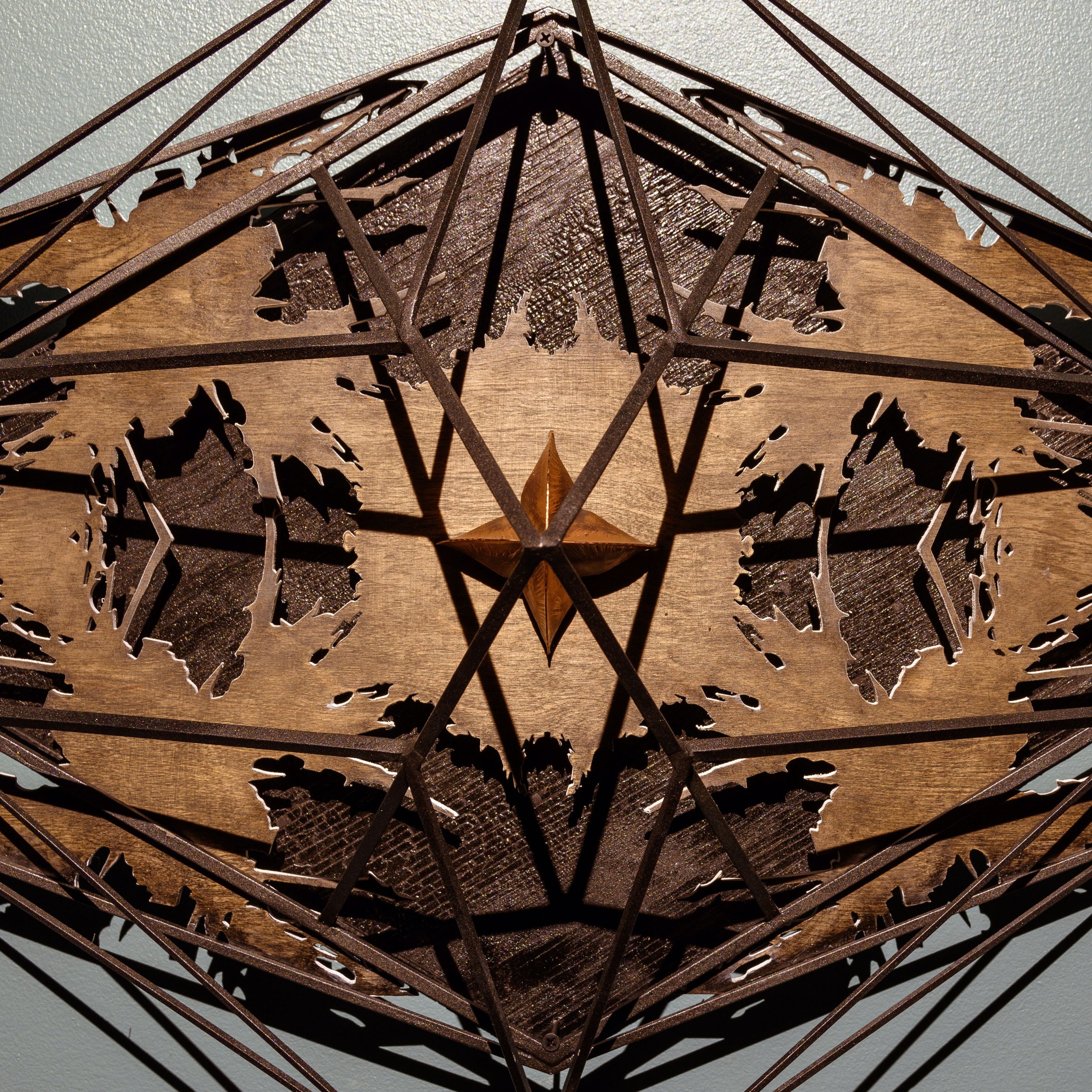
“Shadow”
Wood, Steel, Copper
This piece delves into the phenomena of light, exploring how wavelengths manifest in their opposites. At the heart of the work lies a forged copper form, one of the most conductive materials, symbolizing the transfer of energy through particle movement. This central element alludes to the potential energy present in all matter. Embedded within an abstracted image of a neuron, the composition evokes a kind of ‘Rorschach’ effect, inviting multiple interpretations. The surrounding metal framework, inspired by neuronal network diagrams, casts shadows that further transform the piece, adding layers of complexity to its structure and meaning; the piece changes form as the viewer changes their positions.


Images from the Union Hall exhibition “Perception Shift” in Denver. Curated by Amy Hoagland.


“Paradox of Entropy”
Cast iron, 18-karat gold fused damascus steel, brass, forged bronze.
Elements of this piece are inspired by the James Webb telescope which is designed to detect the longest type of wavelength in the EM spectrum: infrared. The process of plating the beryllium mirrors involves vapor deposition, where gold is vaporized within a vacuum.
In a broader scope, it reminded me of the seemingly contradictory laws of thermodynamics. When abstracted and distilled, they state that energy within a system will always remain constant and will simultaneously never stay the same. It will continuously dissipate into chaos. At the core is a hexagonal piece of Damascus steel, deeply etched to reveal its 'raindrop' pattern, with 18-karat gold fused to the surface, highlighting the texture beneath. A glass lens, set in a brass bezel and bronze prongs, magnifies the centerpiece. The cast-iron form surrounding it references an earlier sculpture, symbolizing the origin of life.
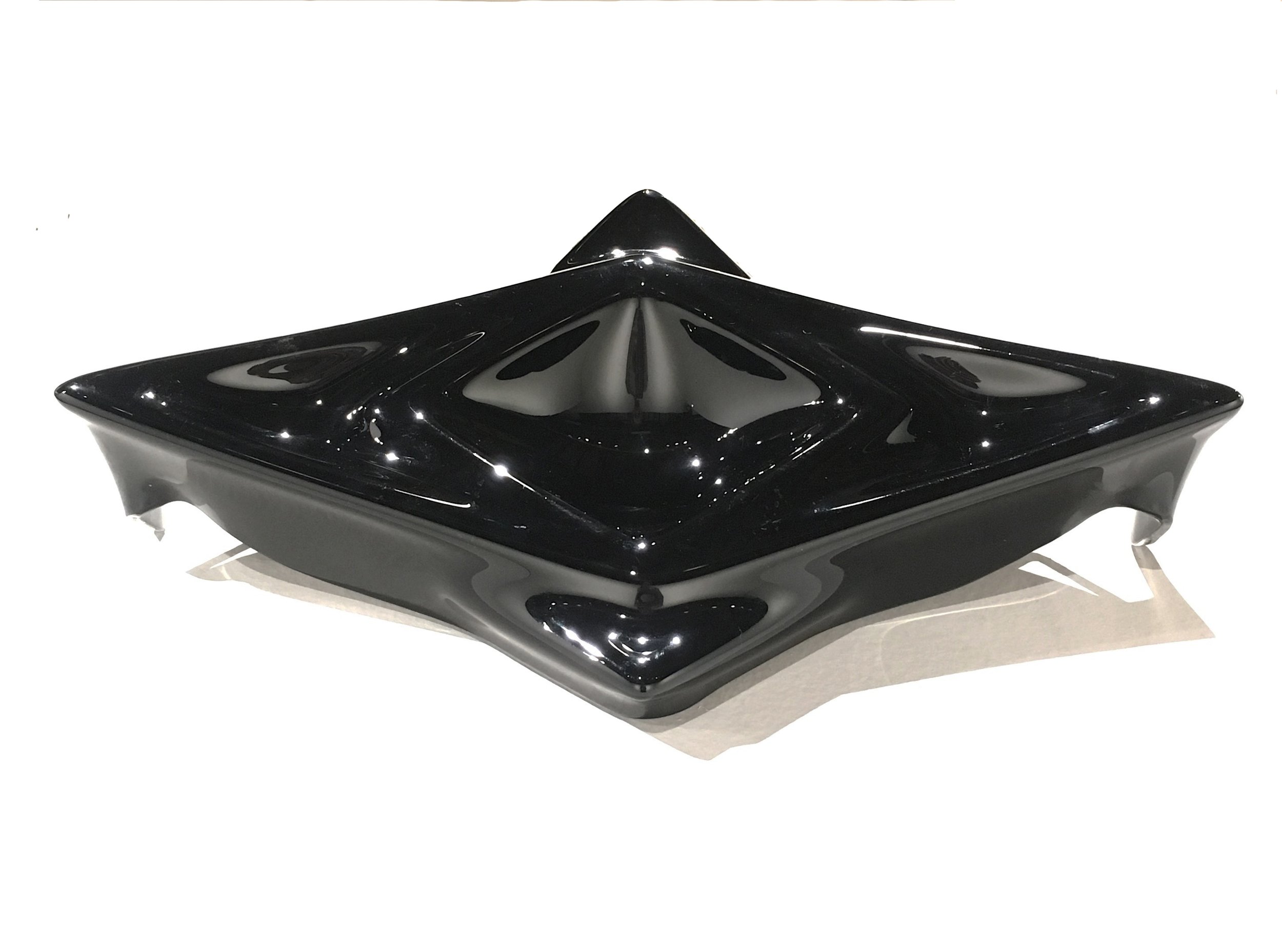
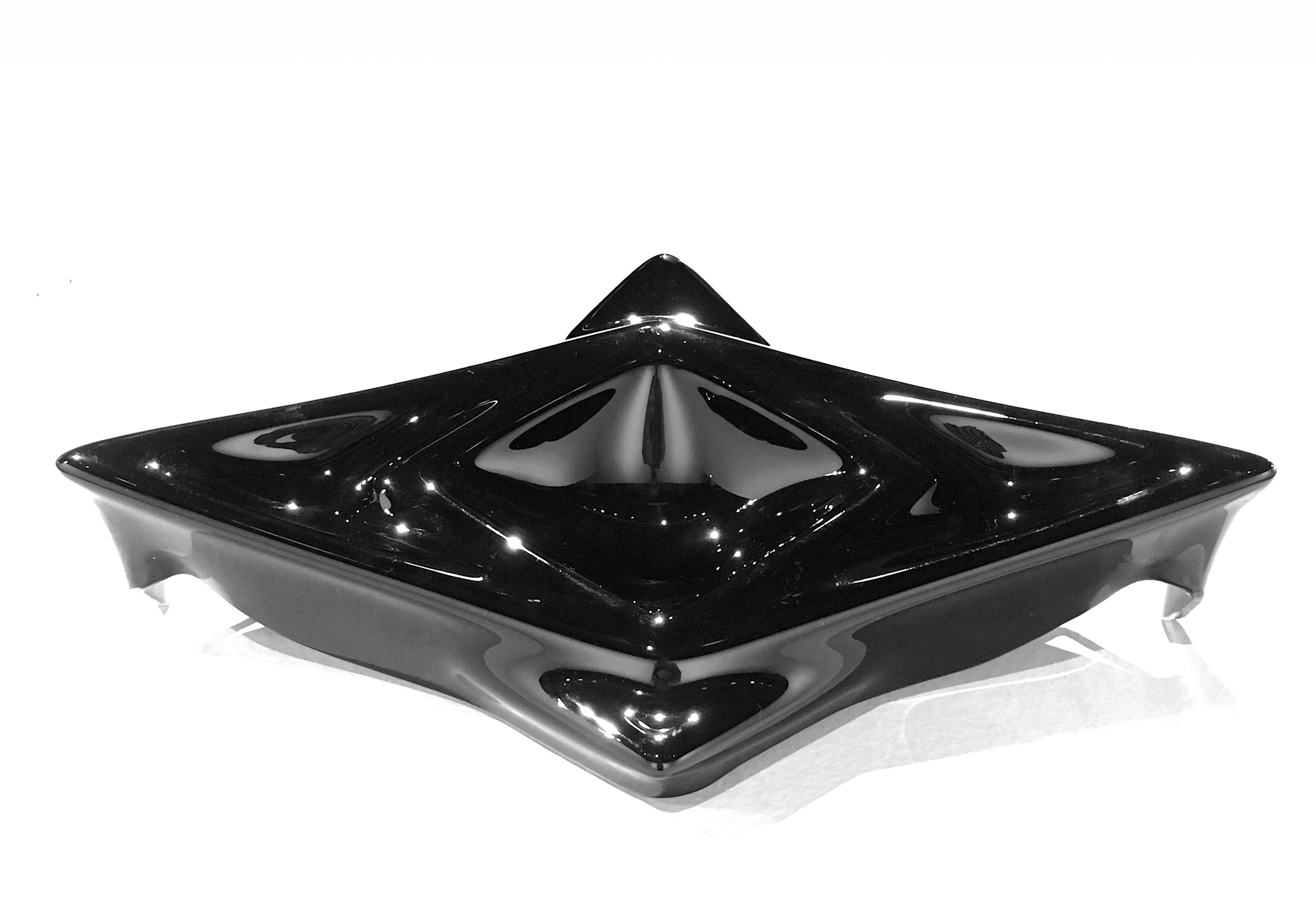
“Wane”
Steel + glass
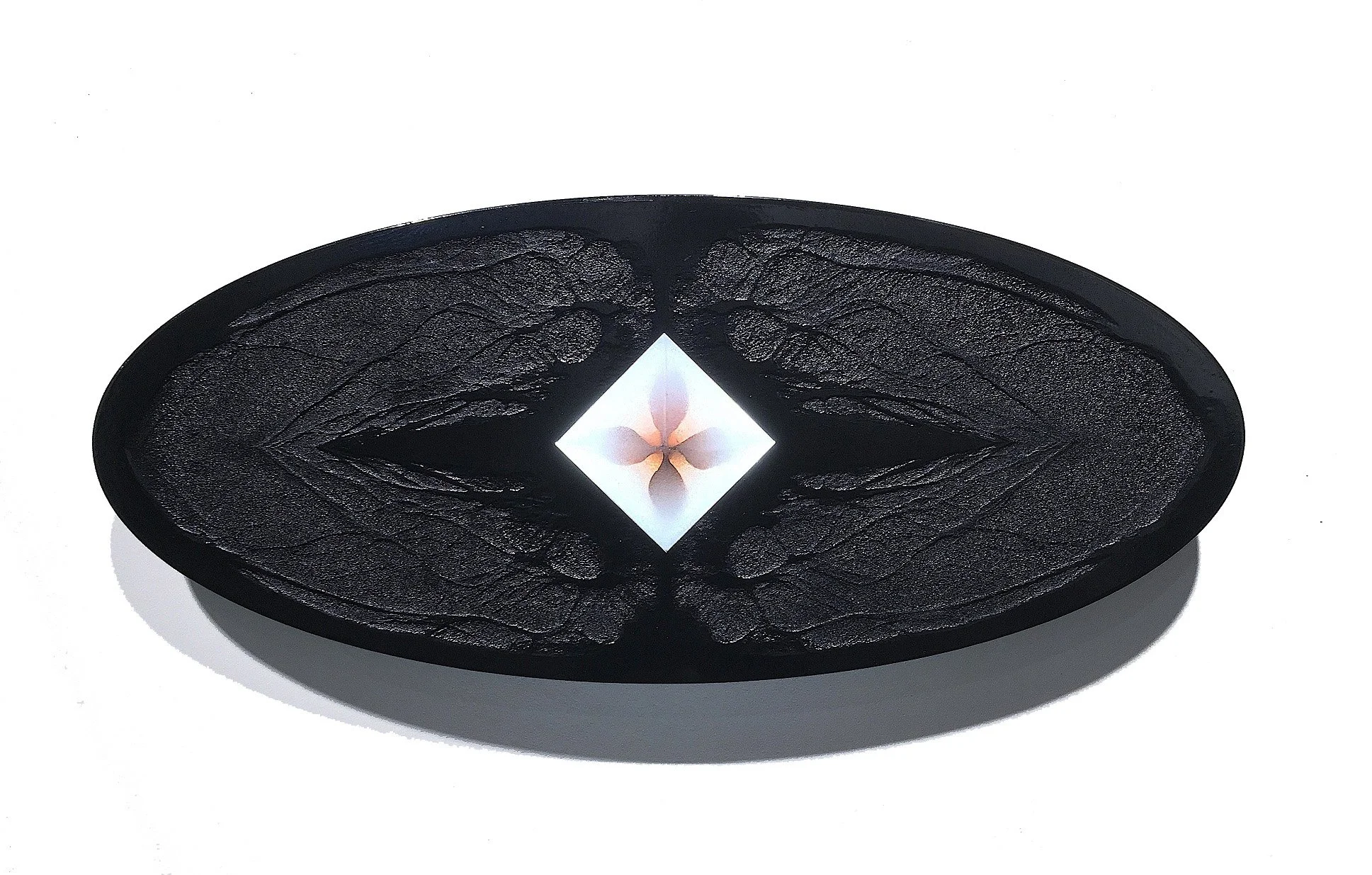
This piece was an examination of the capacity of heat energy within voids. A sense of ambiguity is emphasized when these materials “absorb” one another. The human experience is filled with a multitude of perspectives and emotions that often occur simultaneously; the duality is mimicked in this artwork. The opaque black glass sensualizes the light, softening the hardened vectors of welded steel beneath it.


“Substratum”
Steel + Glass
This piece serves as a window into metaphysics. My body of work has the tendency to examine the nature of reality including the relationship between mind and matter, substance and value, the essence of the universe and our place within it. By sculpting through thermal manipulation, I investigate these ideas, leveraging materials with cosmic origins to evoke an abstract “window” for interpretation. Here, I extended the glass to its limits, letting it shape and distort around the negative space framed by the steel structure, effectively “freezing” it in its current form. The glass’s image stretches, resembling how I imagine space distorts around gravitational forces across the universe.


“Through the Skin”
Leather + Mirror + Wood
This triptych honors the intricate geometry mirrored within ourselves, presenting abstracted platonic solids cut from leather (skin) to expose a mirror beneath. This reflective surface captures the viewer and their environment, allowing glimpses of both self and surroundings within the voids. Here, refracted elements of our atmosphere emerge, blending inner and outer worlds through these geometrical forms.

“Place in Space”
Blown Glass + Steel
Glass is renowned for its optical properties, particularly its ability to refract, reflect, and transmit light. These characteristics have led to its widespread use in lenses, windows, mirrors, and prisms, allowing for the diffraction of photons. The symmetrical steel frames help to define a seemingly ephemeral space highlighting the effects of the mirroring. This concept emerged from reflecting on how the Mesoamericans (and other universal cultures) used reflecting pools to document and navigate the constellations often aligned with architectural markers. Luis Barragán – world-renowned Mexican Architect – would also use spherical mirrors as decorative objects in homes allowing a full view of his carefully curated spaces, reflecting both the surroundings and those within them.

“Conductivity of Grey Matter”
Steel, mirror, pattern-welded steel with copper inlay. 2022.
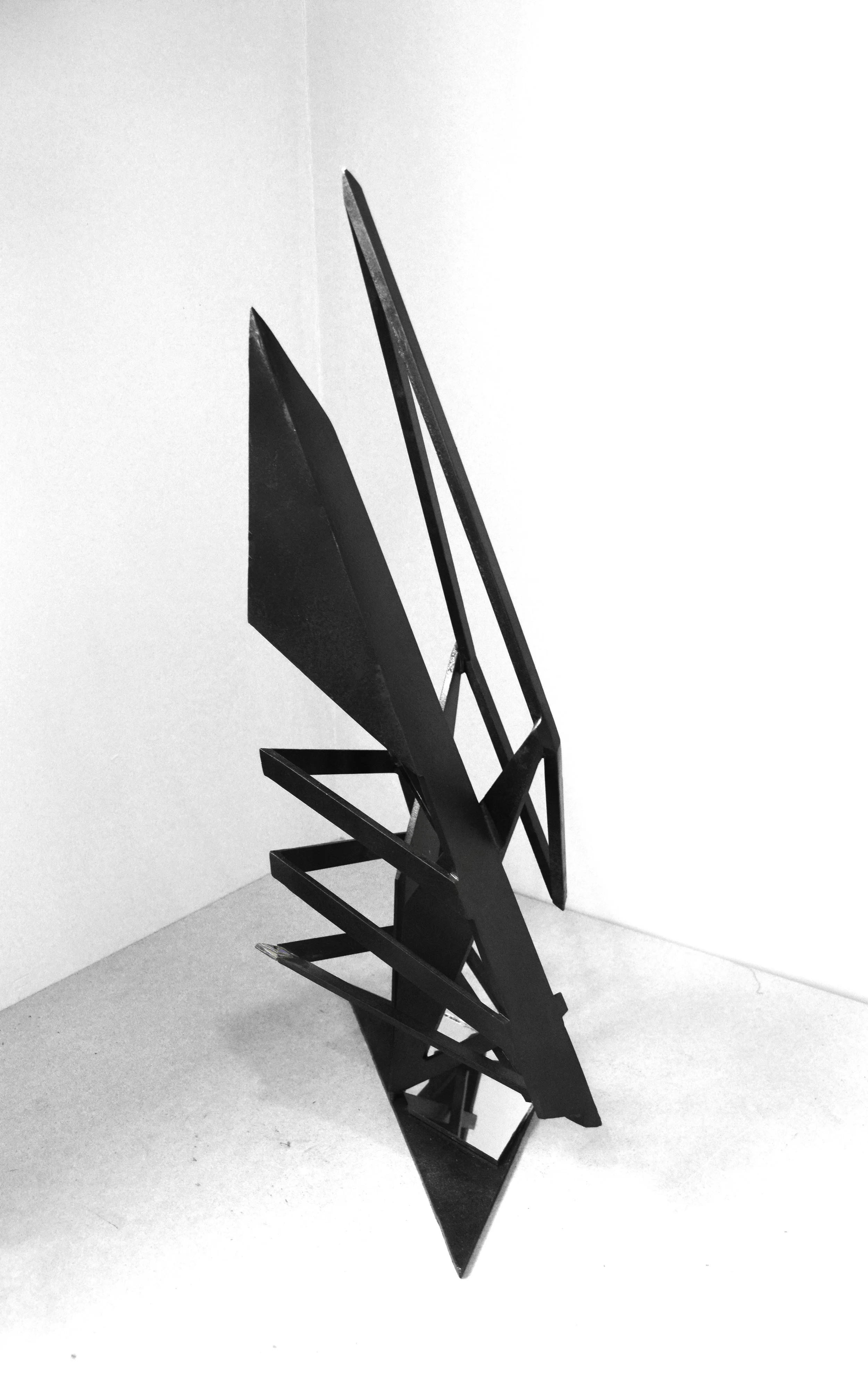
A vessel of intersecting planes, this architectural form fractures space, pulling linear connections into a rhythmic convergence around a portal of layered neuronal cells.
The grey matter of the brain is an electric landscape—muscle, memory, perception, and control colliding in a symphony of impulses. These signals shape our reality, manifesting thought into action, sensation into being. Within this structure, movement is both contained and infinite, a reflection of the mind’s endless, electrified network.
“Chromium Cage”
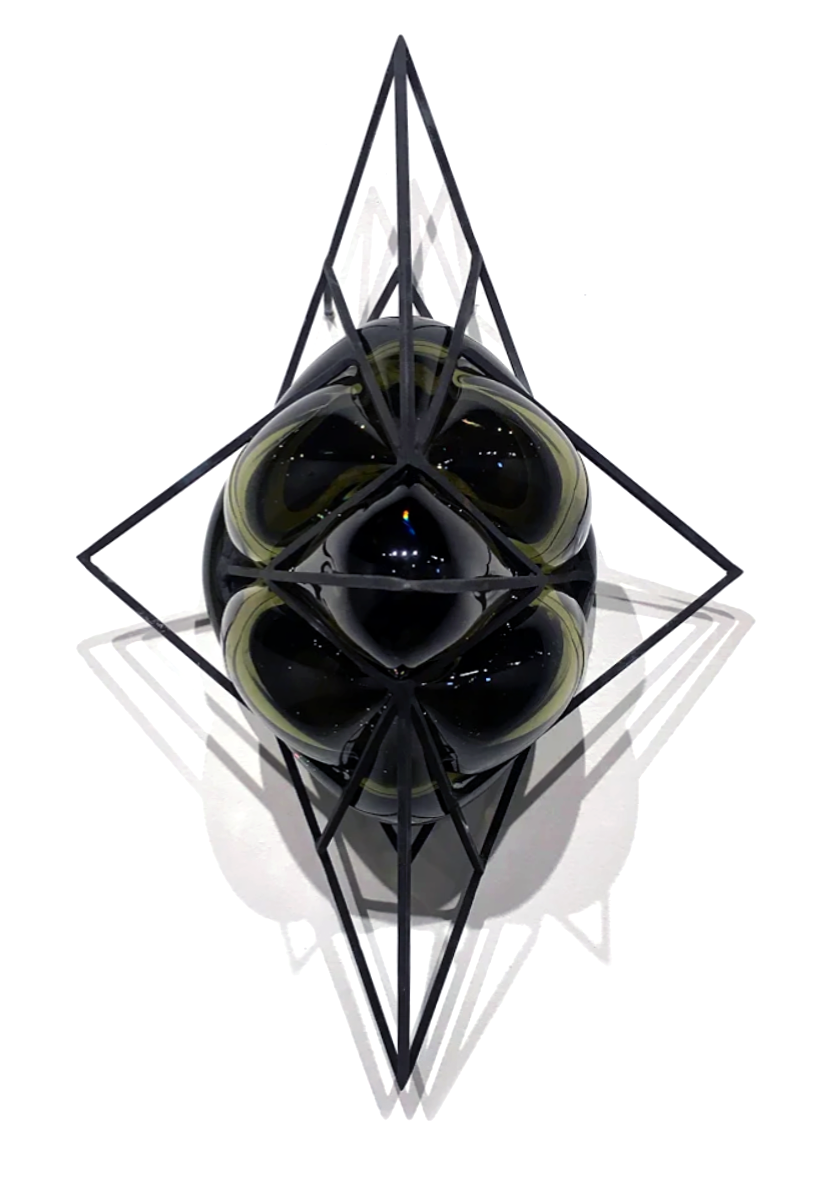
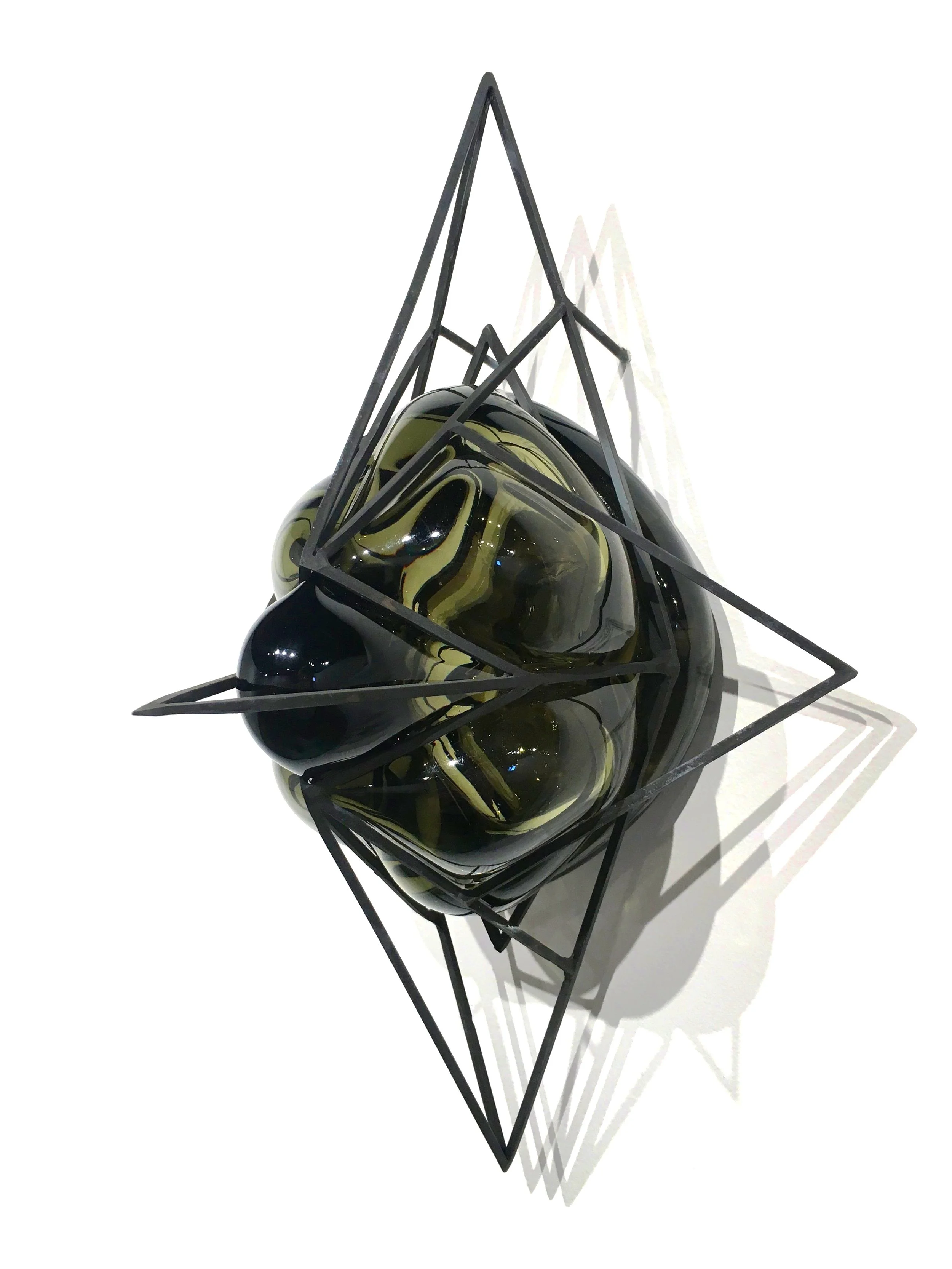
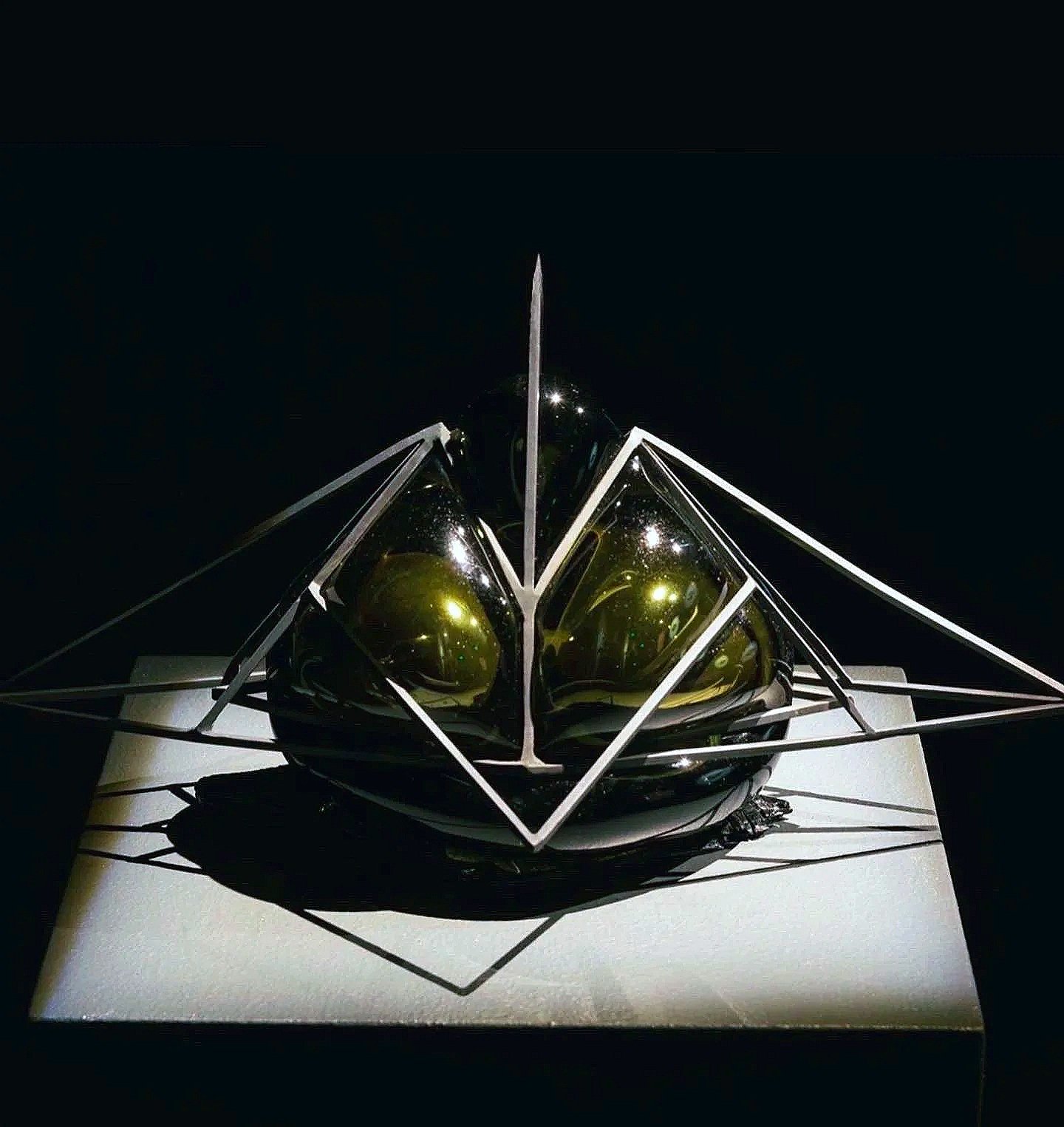
Steel and Blown Glass
This sculpture explores the interplay between glass and steel, materials that may seem at odds yet share an intrinsic connection in this work. The deep, chromium-infused glass lends its rich coloration, while the steel framework both contains and accentuates it. Creating these pieces requires careful foresight—anticipating how the molten glass will settle within the rigid geometry of steel to preserve the intended form. The lensing effect is integral: the thicker front face refracts and distorts light differently than the body, inviting the viewer to engage with shifting perspectives and optical depth.
“Momentum”
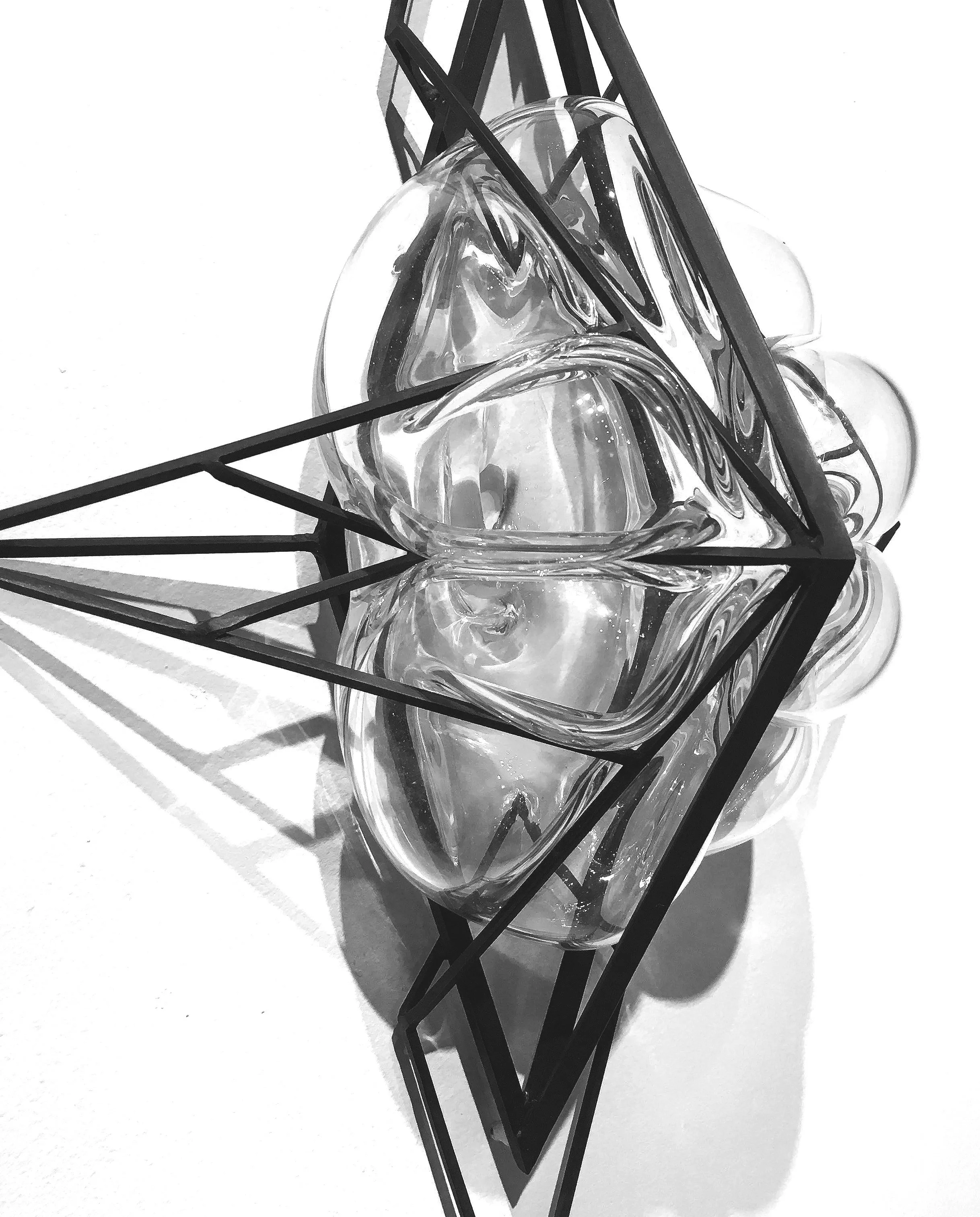
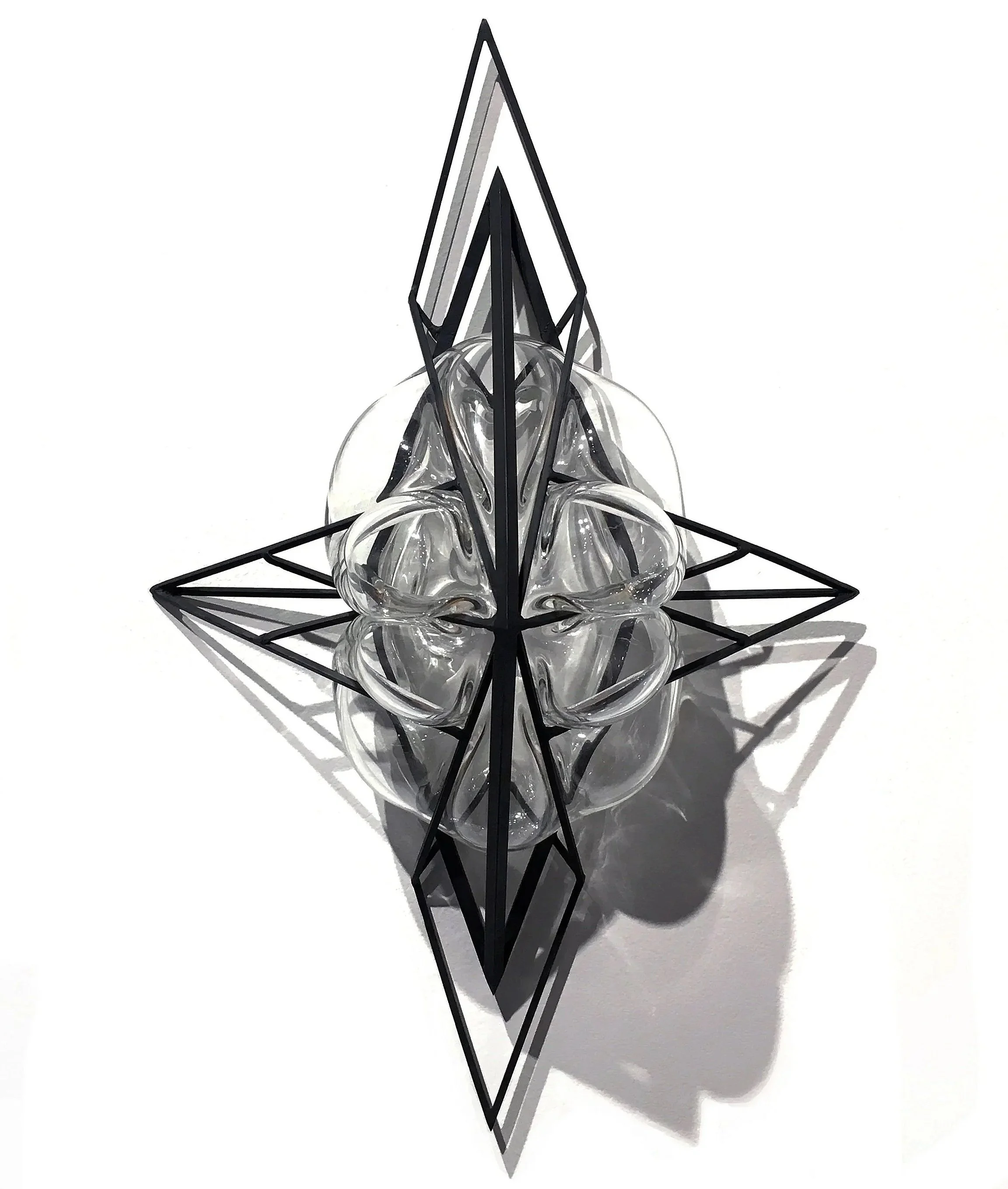
Steel and Blown Glass
This piece is about calculated tension. Like a Rorschach image, it invites multiple readings—the encasing steel may be seen as either a protective sanctuary or menacing imprisonment. Caught in a suspended moment, the glass swells and folds beyond its frame, touching itself in a quiet act of self-defiance that becomes its own constraint. Yet within this narrative of strain, a quiet accord emerges—the two materials rely on one another, their coexistence forming a fragile equilibrium.

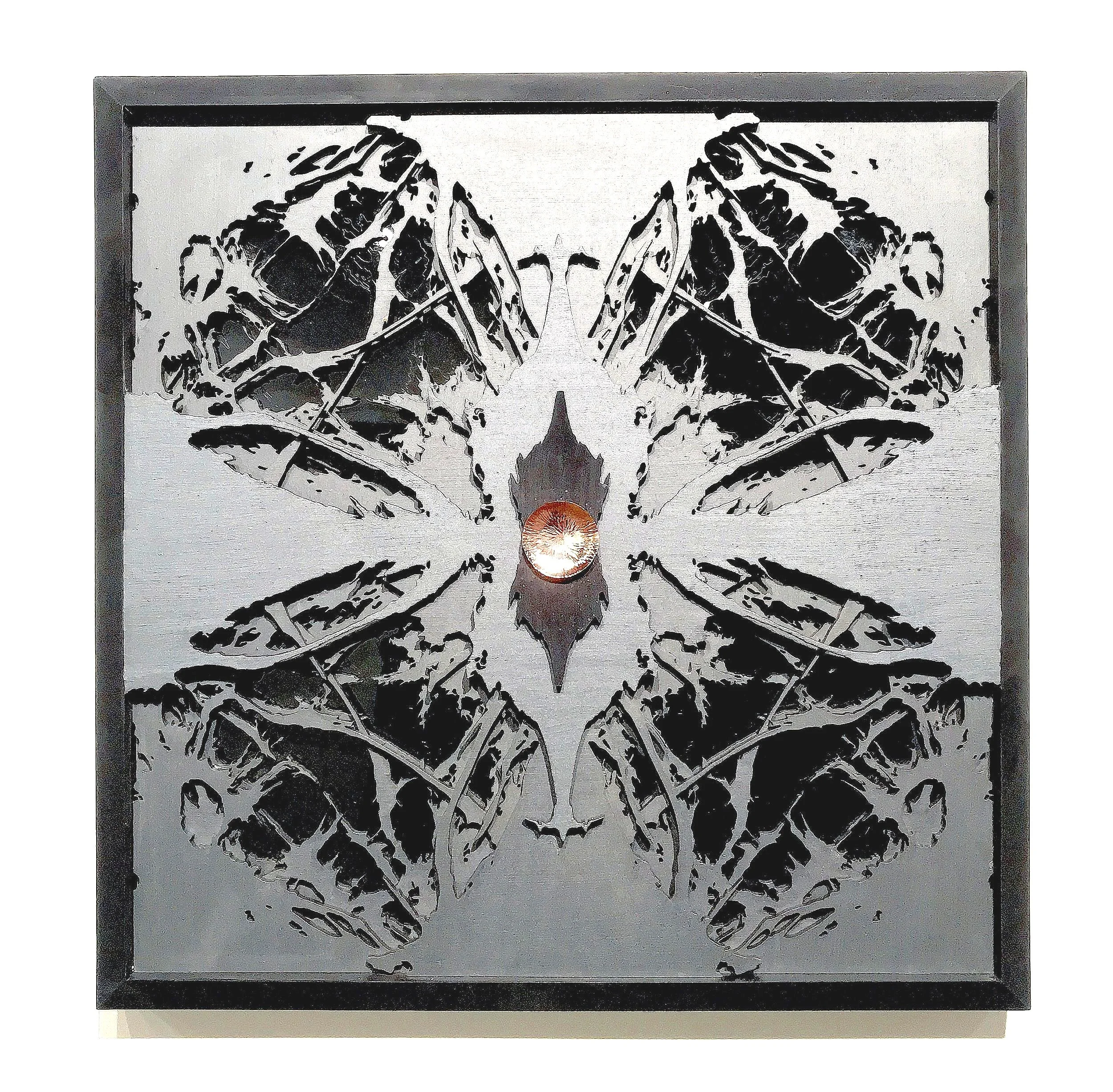
“Parabolic Perceptor”
Acrylic, Wood, Forged Copper
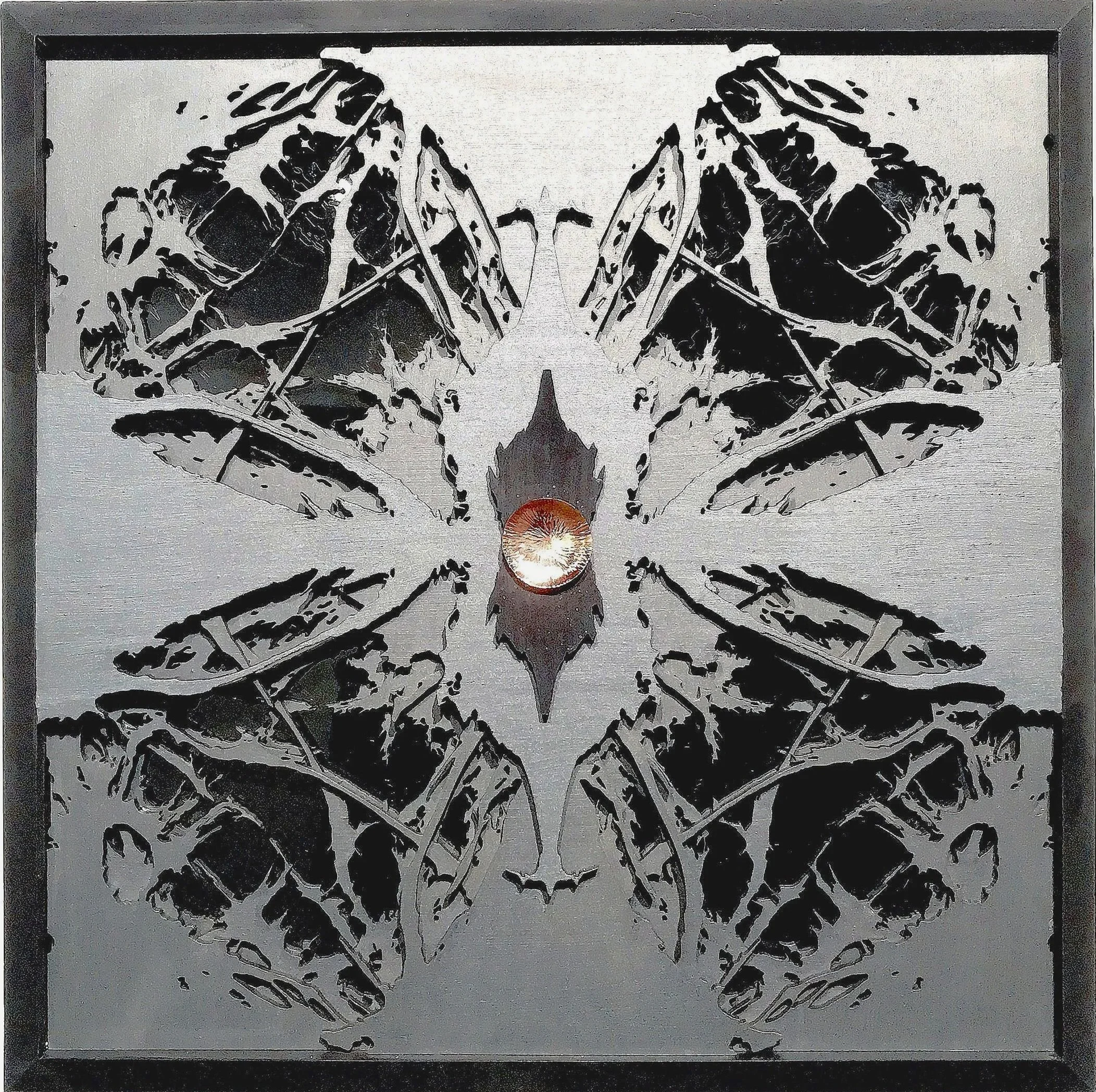
This work layers repeated distortions of a single neuron image, each iteration abstracted further until it recalls the fragmented patterns of an MRI scan. Inspired by the parabolic reflectors used in large-scale astronomical telescopes, its concave copper centerpiece suggests the form of an iris. Like a telescope gathering and bending starlight, this wall sculpture reflects on how we receive, refract, and focus light — and information — into the mind.


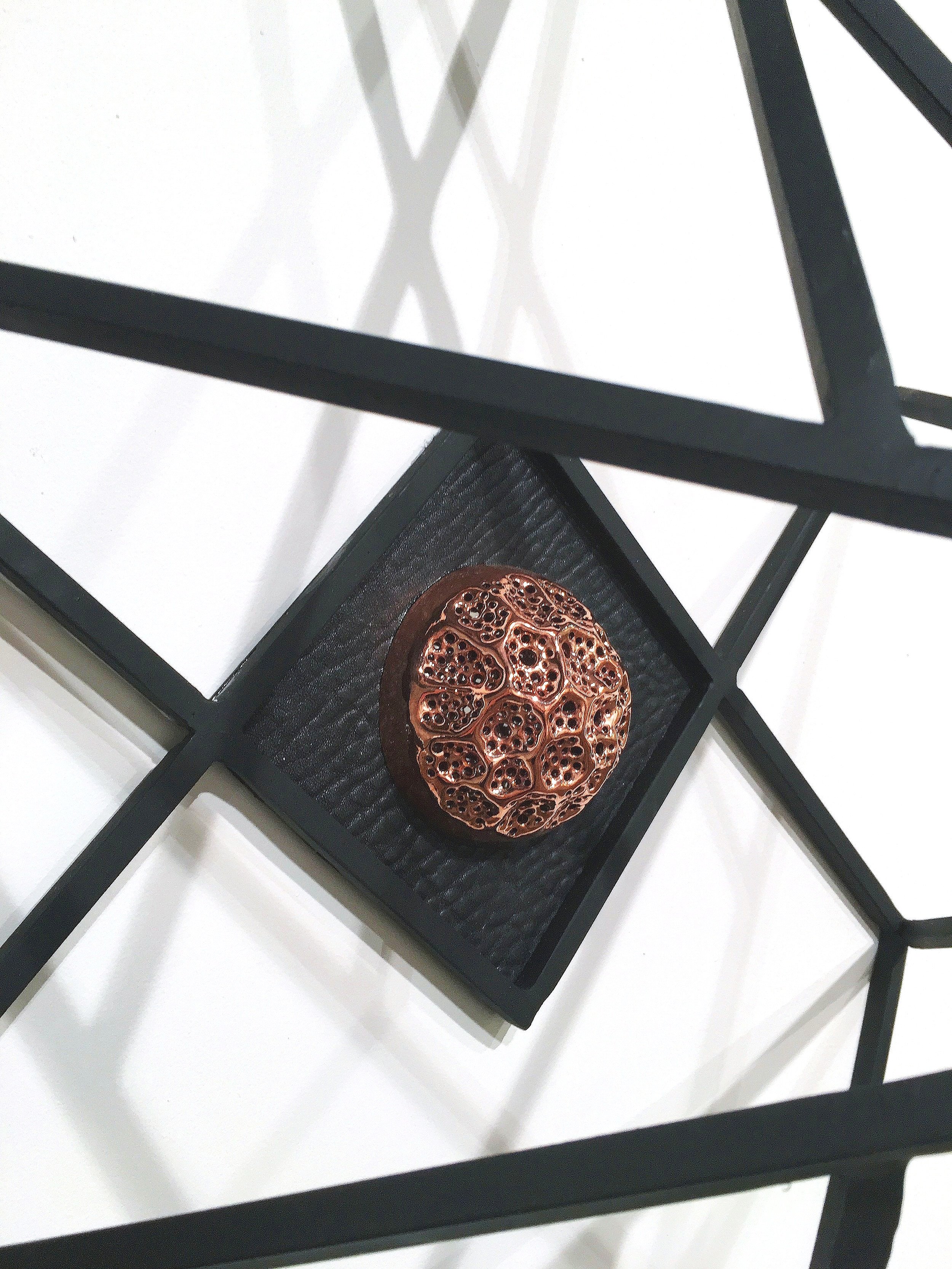
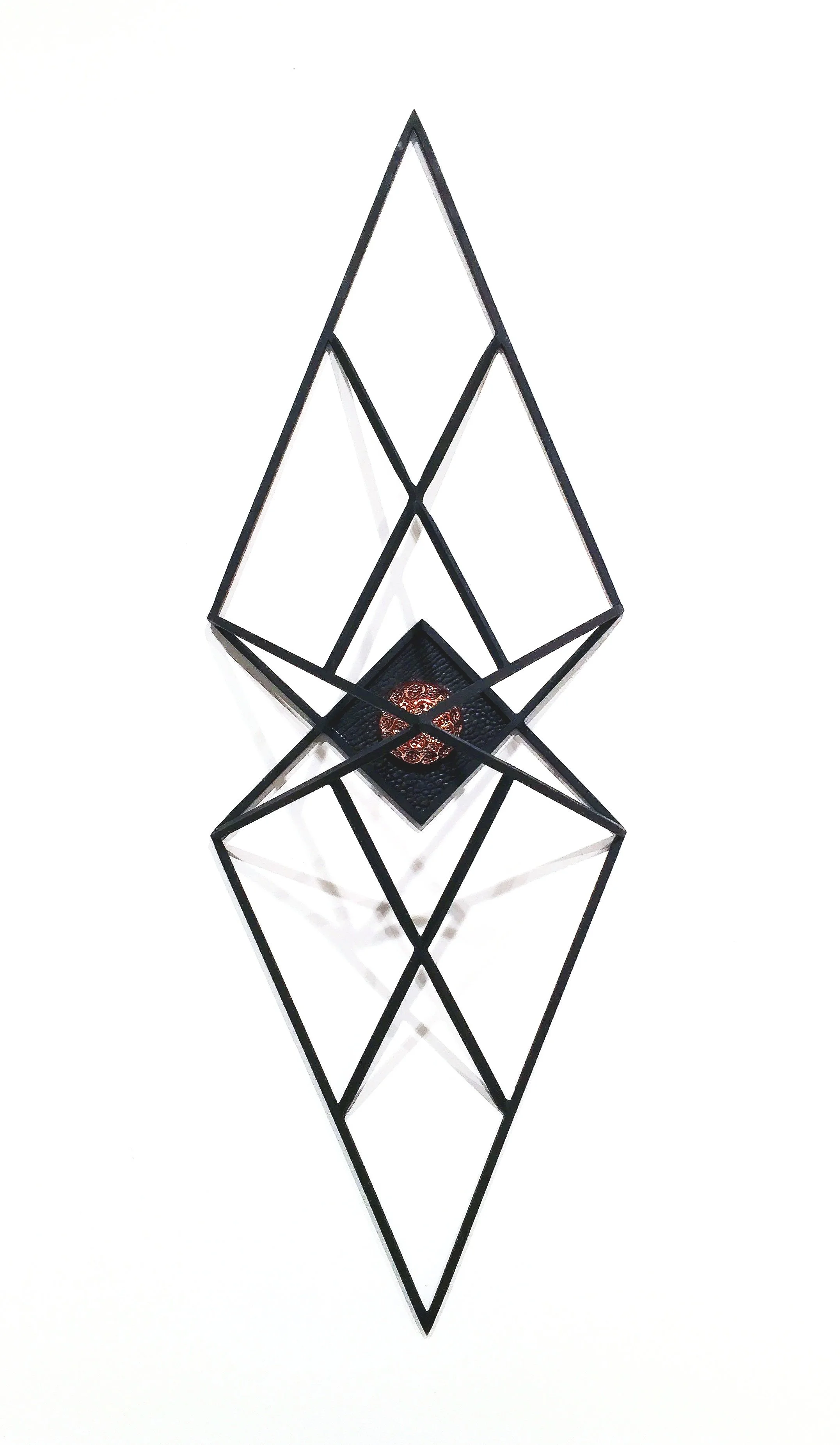
“Mitosis”
Forged Copper, Steel, Mirror, Leather
This wall sculpture explores the networks involved in neurological and biological processes. The geometrical steel structure is inspired by neural network diagrams that are designed for artificial intelligence within computers that mimic human thinking. The center features a pierced forged copper form that represents a cell. A mirror placed behind the copper dome makes the illusion that this cell-like structure is emerging and multiplying from within the wall. The sculpture dramatically changes dimensions as you walk around the piece and refracts light from behind the dome.
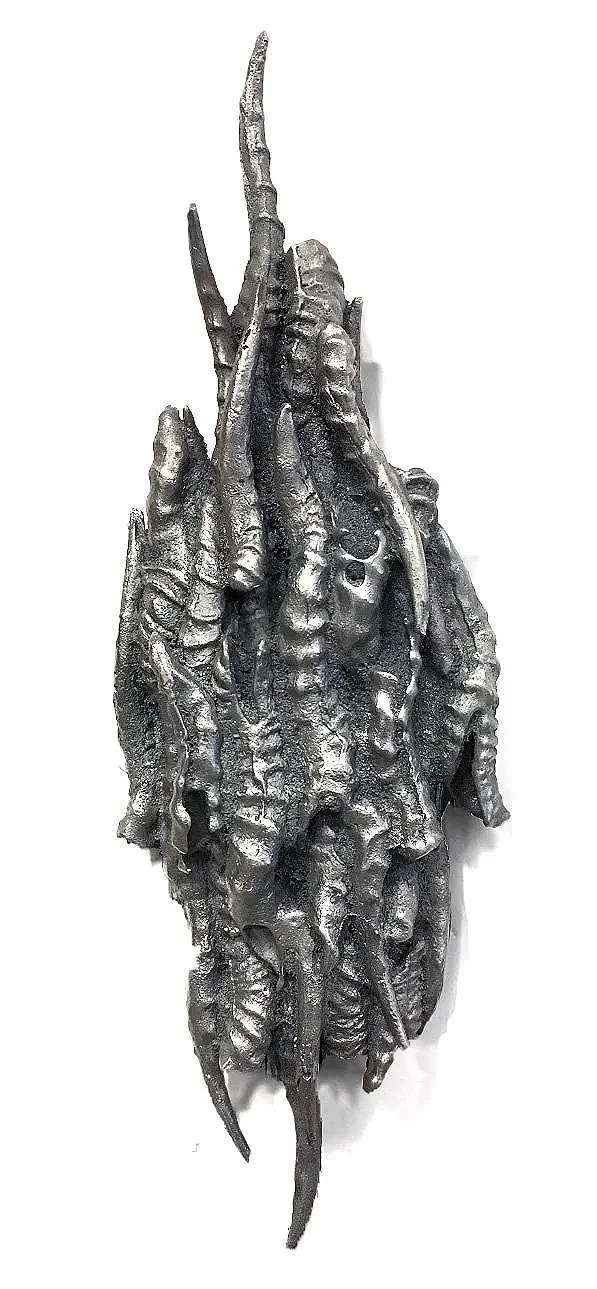
“Genesis”
Cast Iron
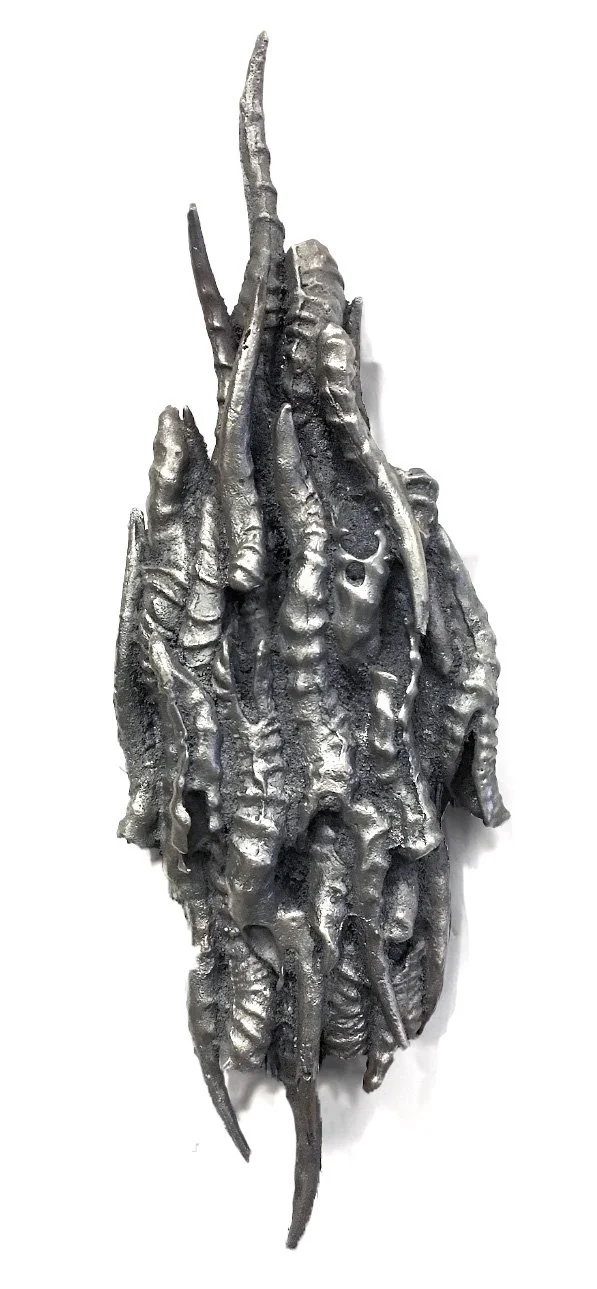
Emerging from the cast iron, the repeated form echoes the slow, mineral growth of stalactites and stalagmites — a rhythm shaped over deep time. This organic progression becomes a meditation on evolution, on what it means to grow and change, and on the fine line that separates us from the rest of life. Iron itself carries a cosmic history: it is the last element forged in the heart of a star before its death. From this destruction, new elements coalesce, and transformation begins again — an endless cycle mirrored in the work’s own evolving form.
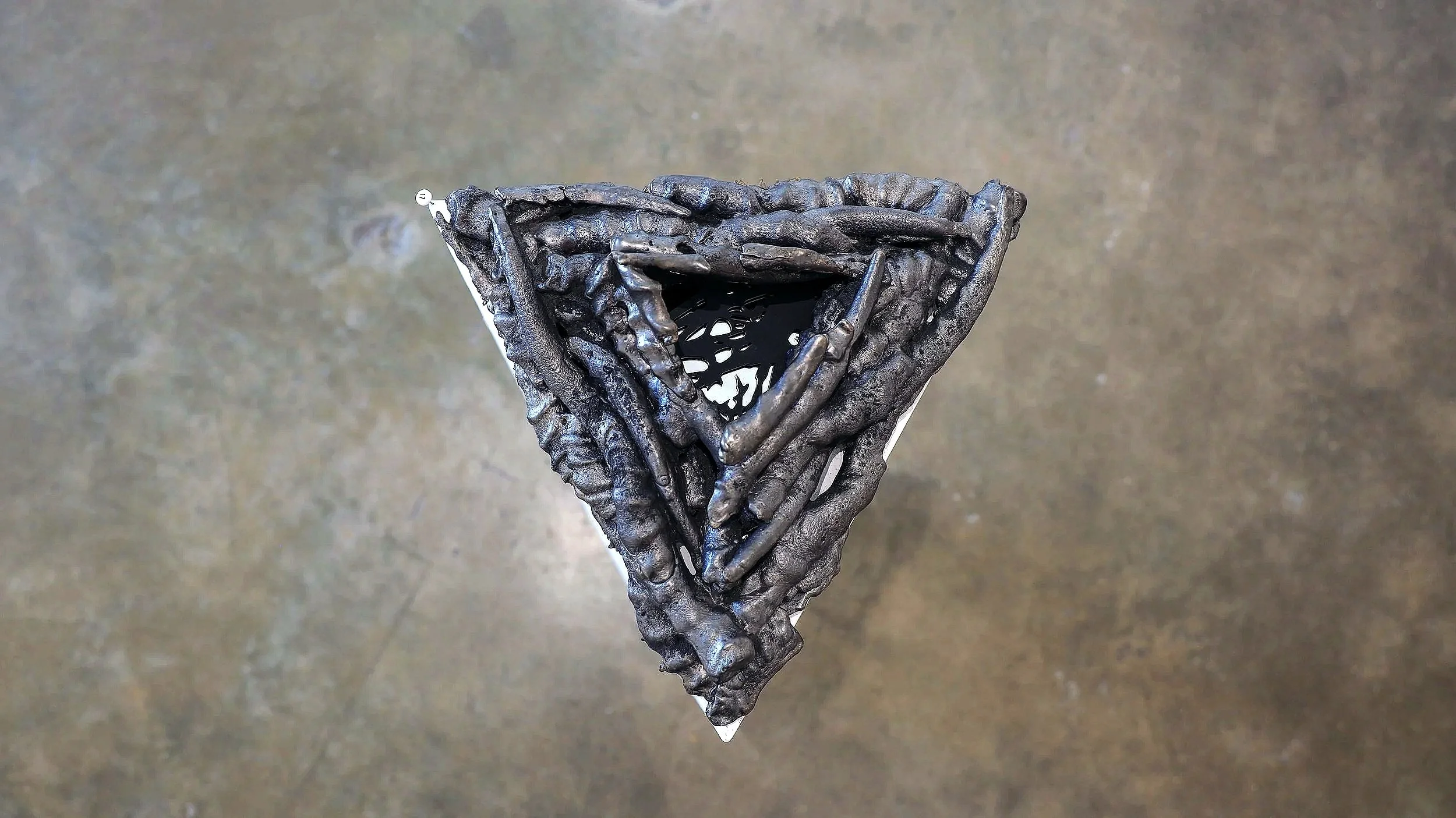
“Neuronal Cenote”
Cast Iron, Mirror, Acrylic
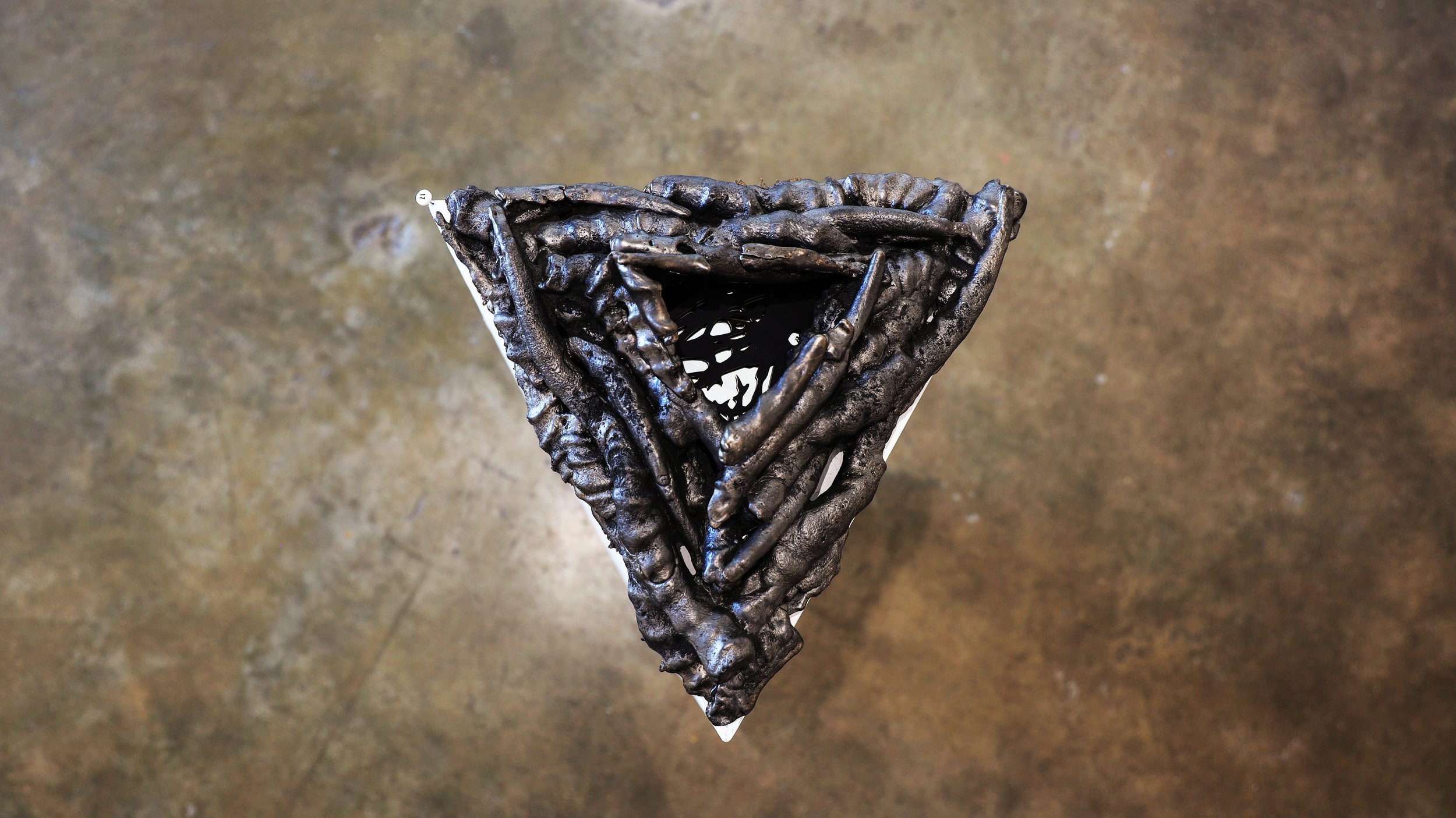
This sculpture entwines the inner workings of the mind with the long arc of human evolution. Ancient Mesoamerican cultures saw cenotes as sacred portals to the underworld and gazed into still reflecting pools to navigate the stars. At its center a mirror holds the image of an abstracted neuron —a network of firing pathways — merging contemporary notions of neuroscience with ancestral cosmology. The surrounding forms, drawn from Genesis, circle this reflection like a halo, anchoring the work to the idea of origin and the shared beginnings of thought, life, and myth.
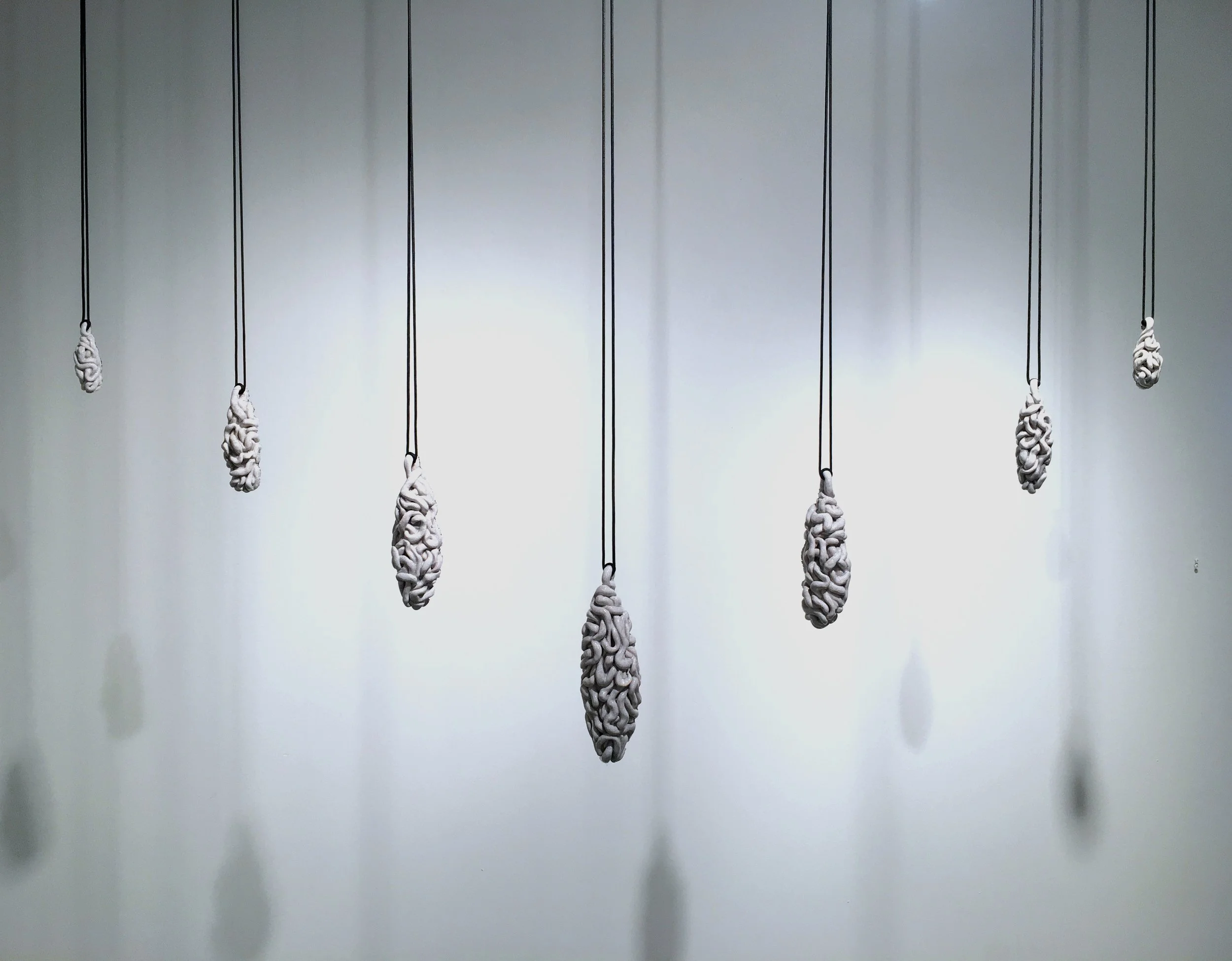
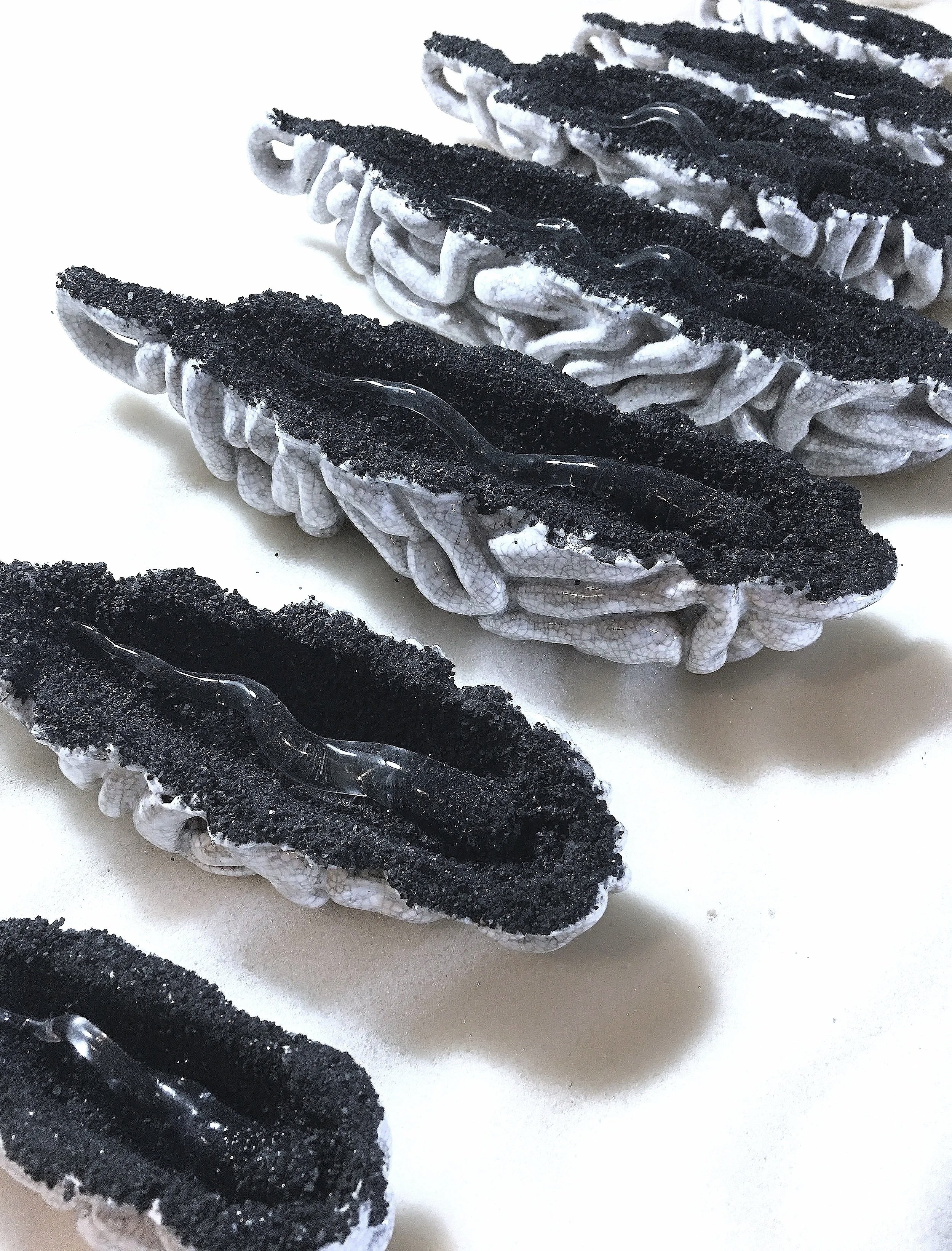
“Cocoon”
Porcelain, Blown Glass, Black Sand
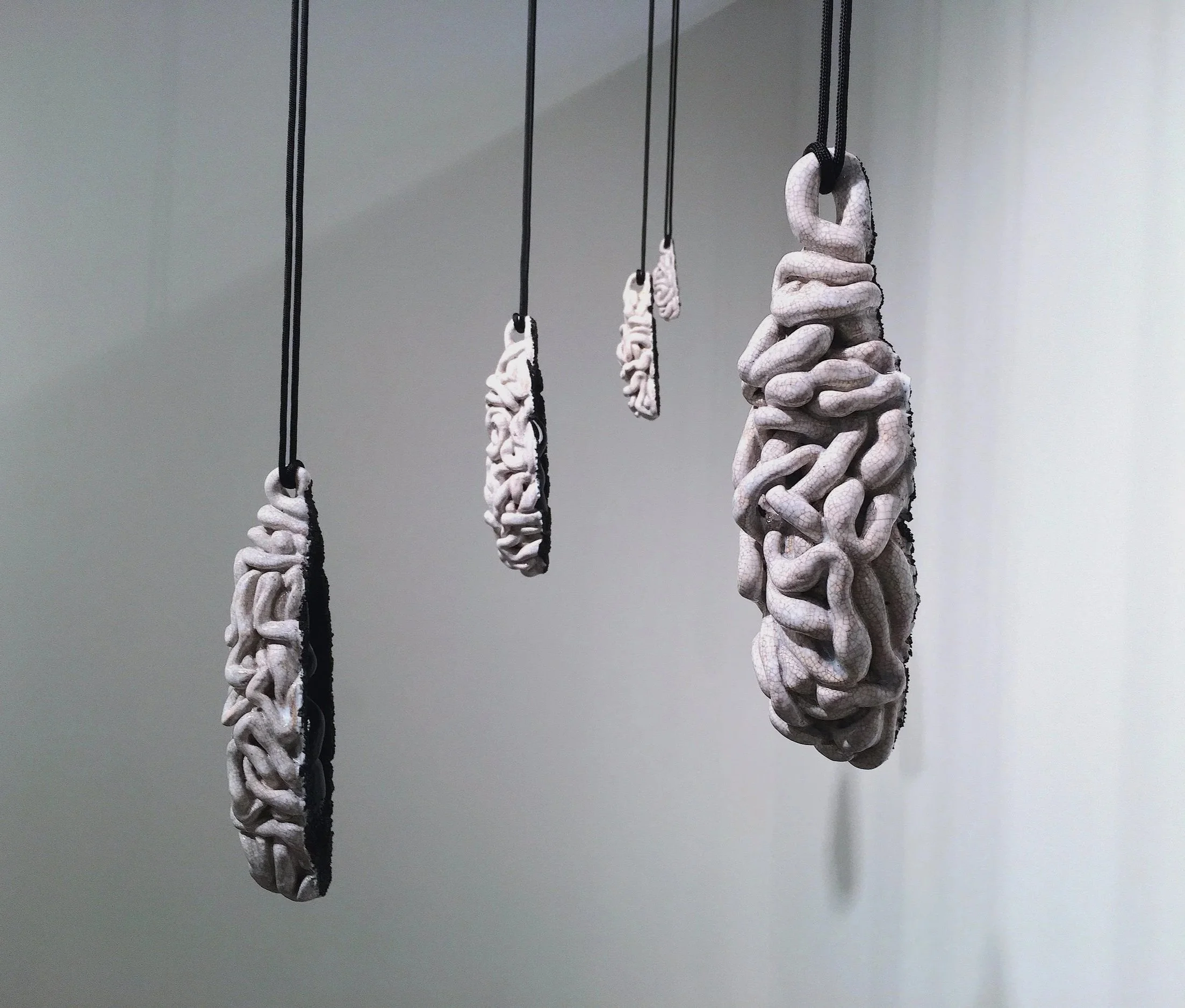
This installation draws from Richard Wrangham’s theory that the discovery of fire reshaped human evolution, allowing energy to shift toward cognitive development. A brain-like cocoon is formed from a single six-meter strand of clay—the length of the human intestine—surrounded by progressively smaller forms structured through phi ratios. Suspended in space, the forms blur distinctions between brain and gut, collapsing systems of thought and digestion into a single evolving structure.Within each form, glass emerges as a slow internal growth—simultaneously foreign and intrinsic—suggesting transformation from within.
The work reflects on the body as an evolving system shaped by heat and consumption, where fire becomes both a tool and a threshold—marking the emergence of intelligence from transformation.
“Asymptote”
Cast Glass
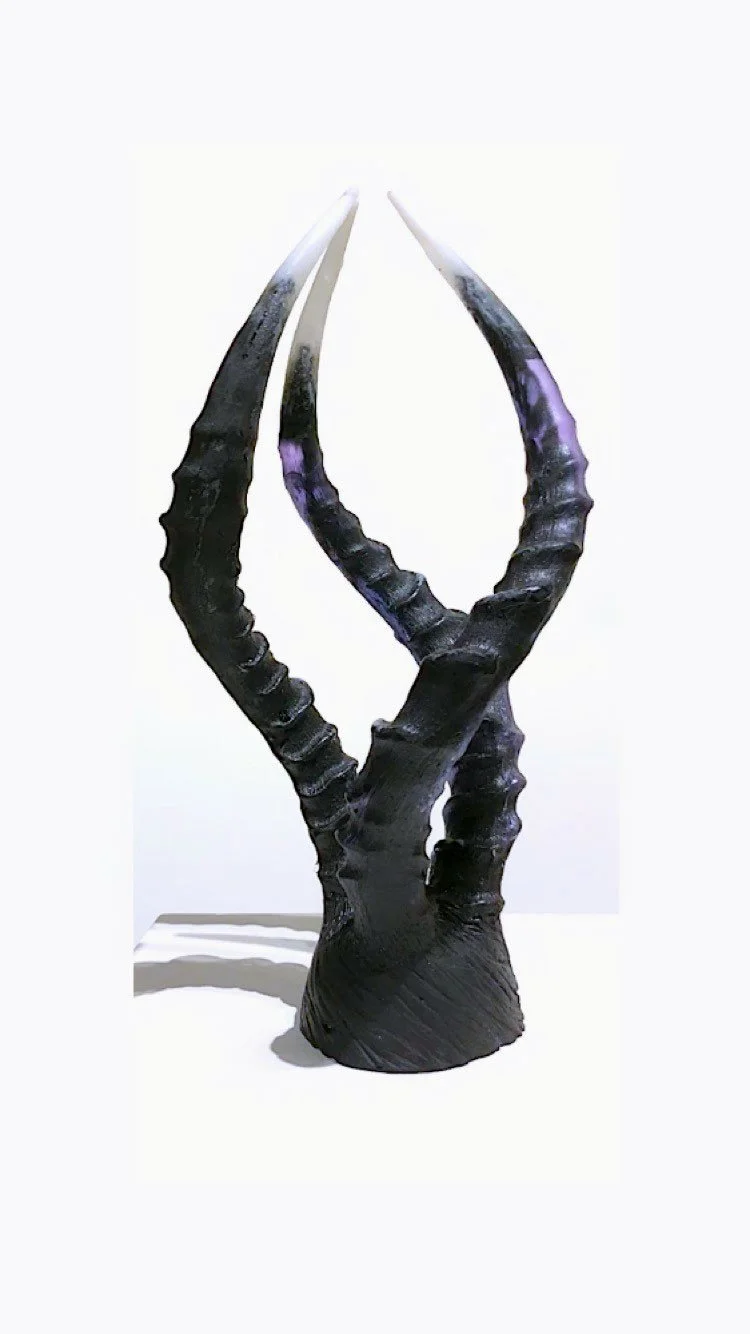
Three cast forms twist upward toward an unseen point of convergence. They approach alignment without ever fully meeting, holding tension in a state of near-resolution.
The glass shifts between opacity and translucency, drawing light through the structure and concentrating it at the tips—suggesting a slow movement of energy through the form.
The work exists at the threshold of intersection, where growth, alignment, and divergence remain unresolved, suspended between convergence and separation.
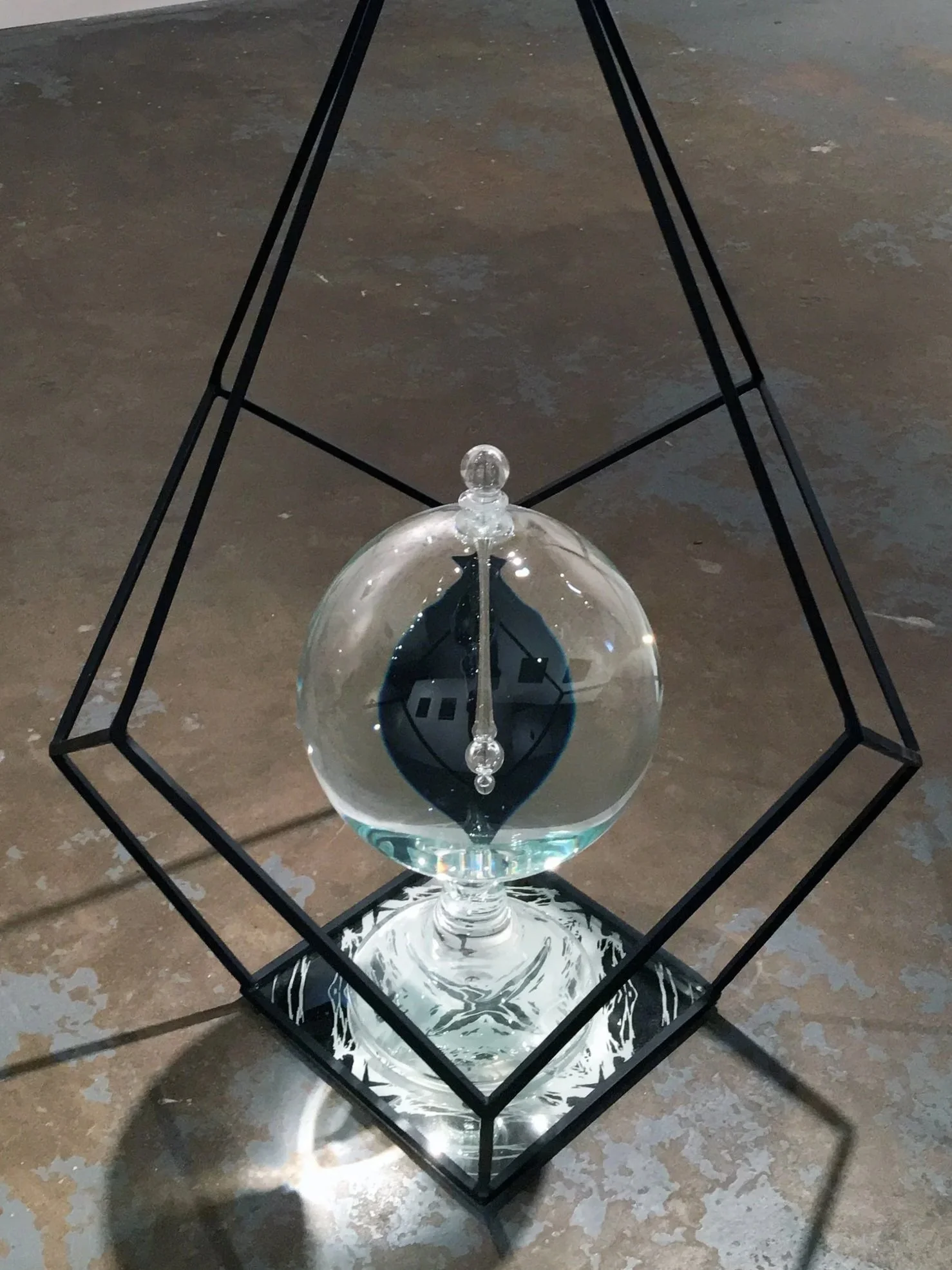
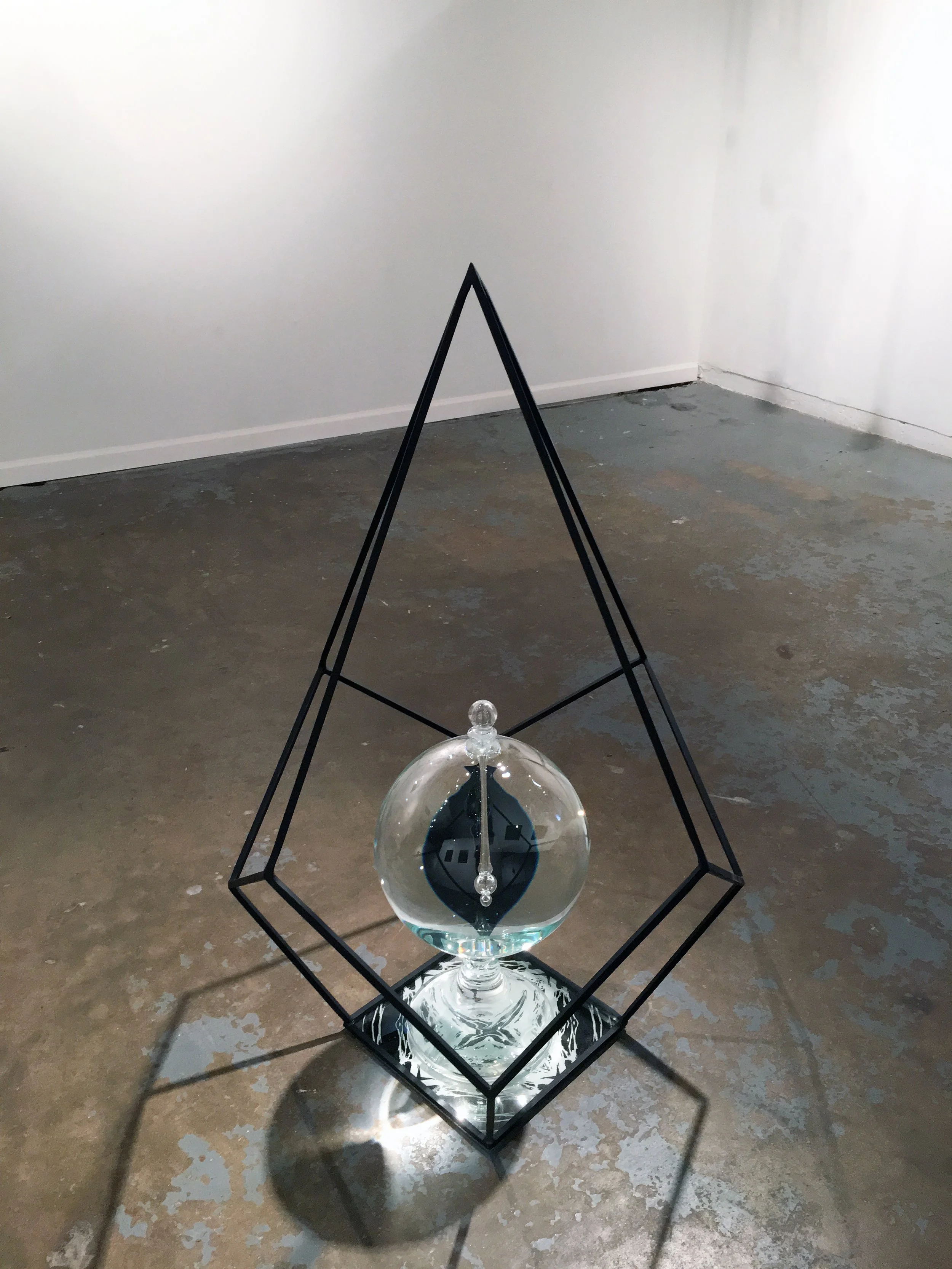
“Interval”
Blown glass, water, welded steel, mirror
Interval: a space between objects, states, or moments.
A welded steel frame encloses a glass orb suspended over an etched mirror surface that selectively reflects its surroundings. The mirror fragments the image, revealing only partial information and disrupting a fixed point of view. Within the orb, water fills the volume while a central droplet remains void—an absence held inside presence. The work considers the interval between containment and release, reflection and distortion, where perception is constructed through what is both seen and withheld.
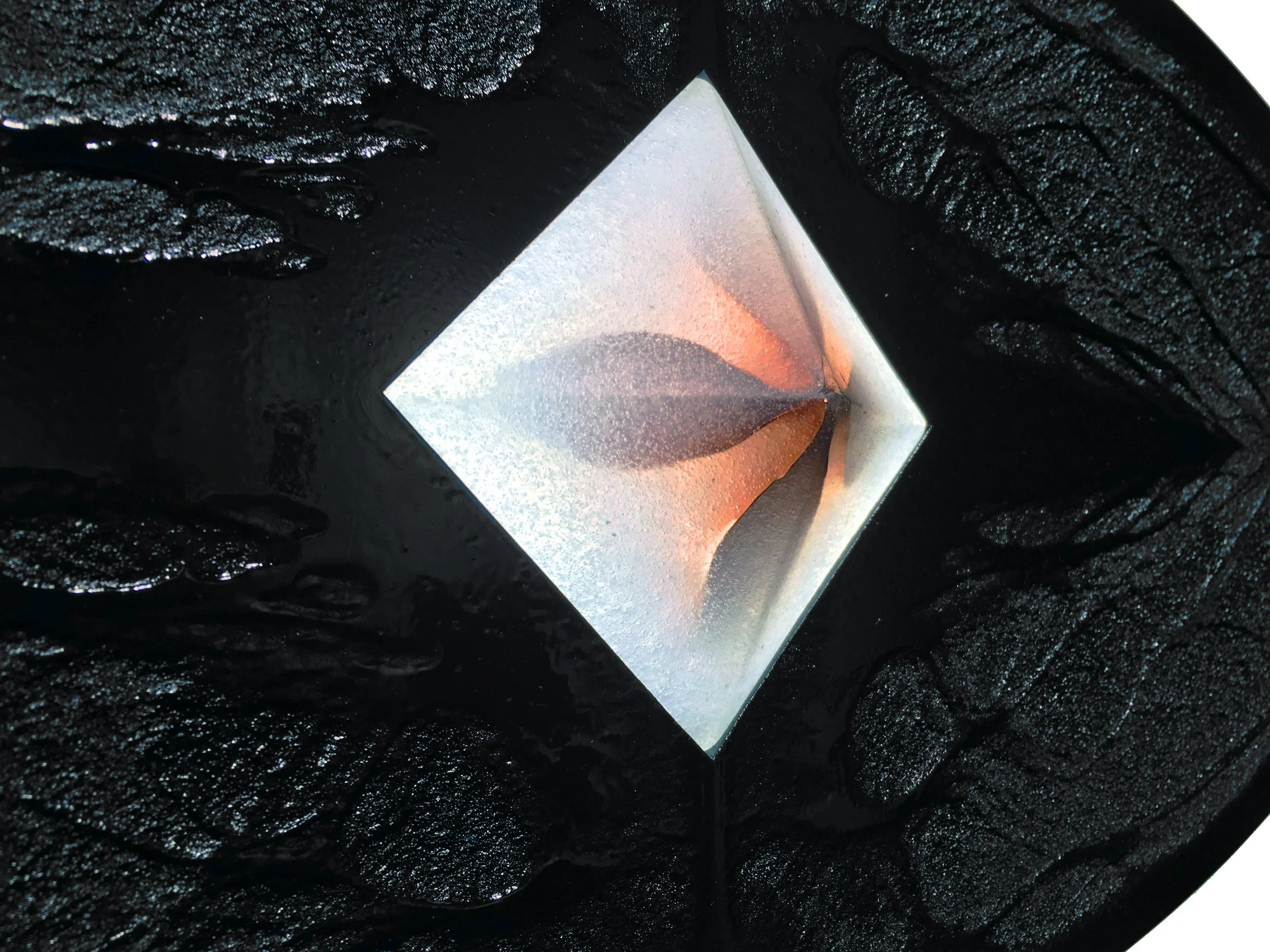
“Transmission”
Forged Copper, Silicone, Wood
Copper, one of the most conductive materials, is used to transmit electrical impulses through systems of attraction and exchange.
In this work, a forged copper structure is embedded within a silicone pyramid—a material commonly used in electronic insulation and circuitry. The pairing of conductor and insulator creates a contained system, where the flow of energy is both enabled and restricted.
The work reflects on transmission as both a physical and psychological phenomenon—how information, energy, and sensation move through systems. As electrical signals also govern activity within the brain, the piece draws a parallel between external circuitry and internal cognition, where what is received is shaped by the structures it passes through.
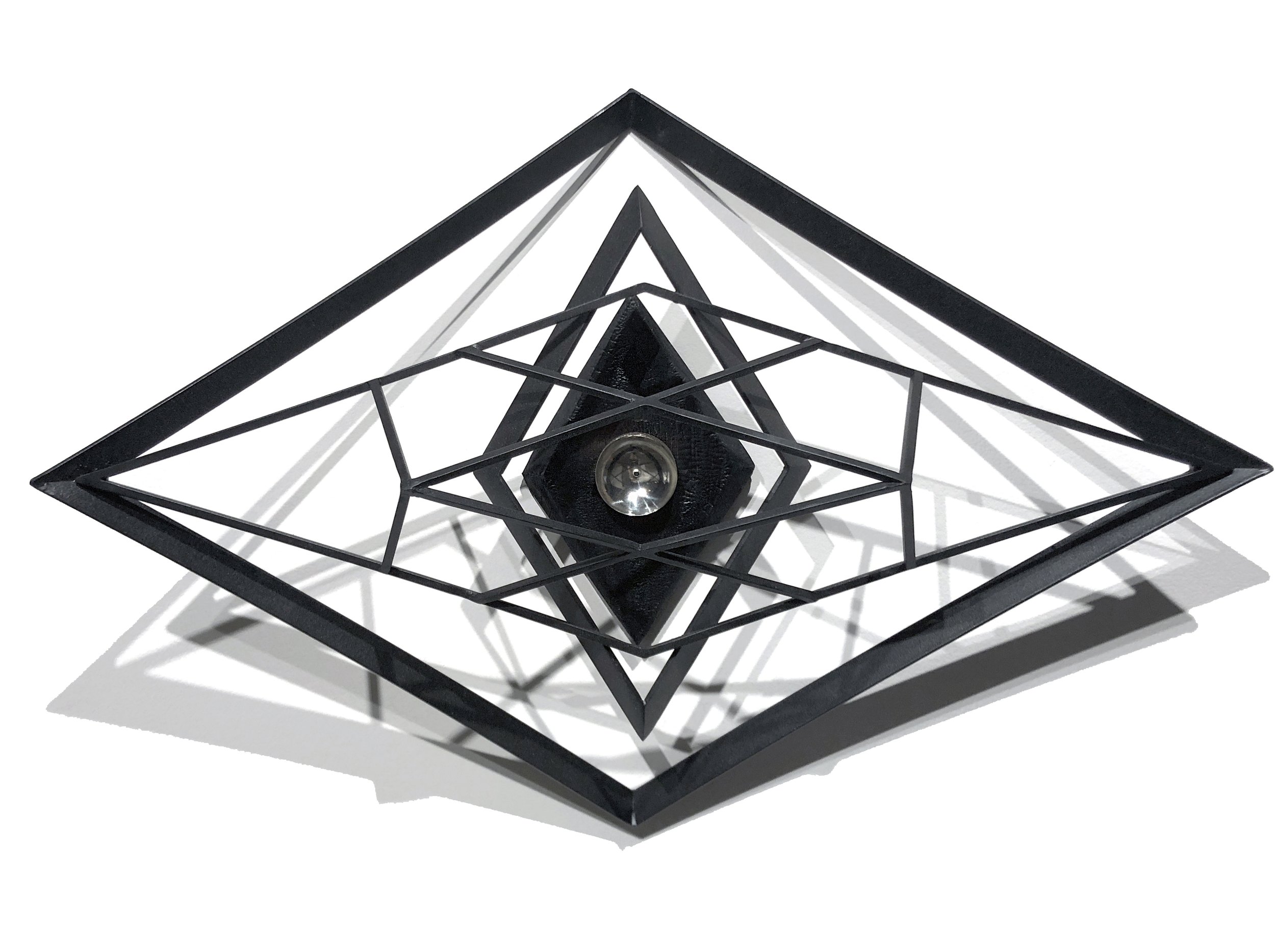
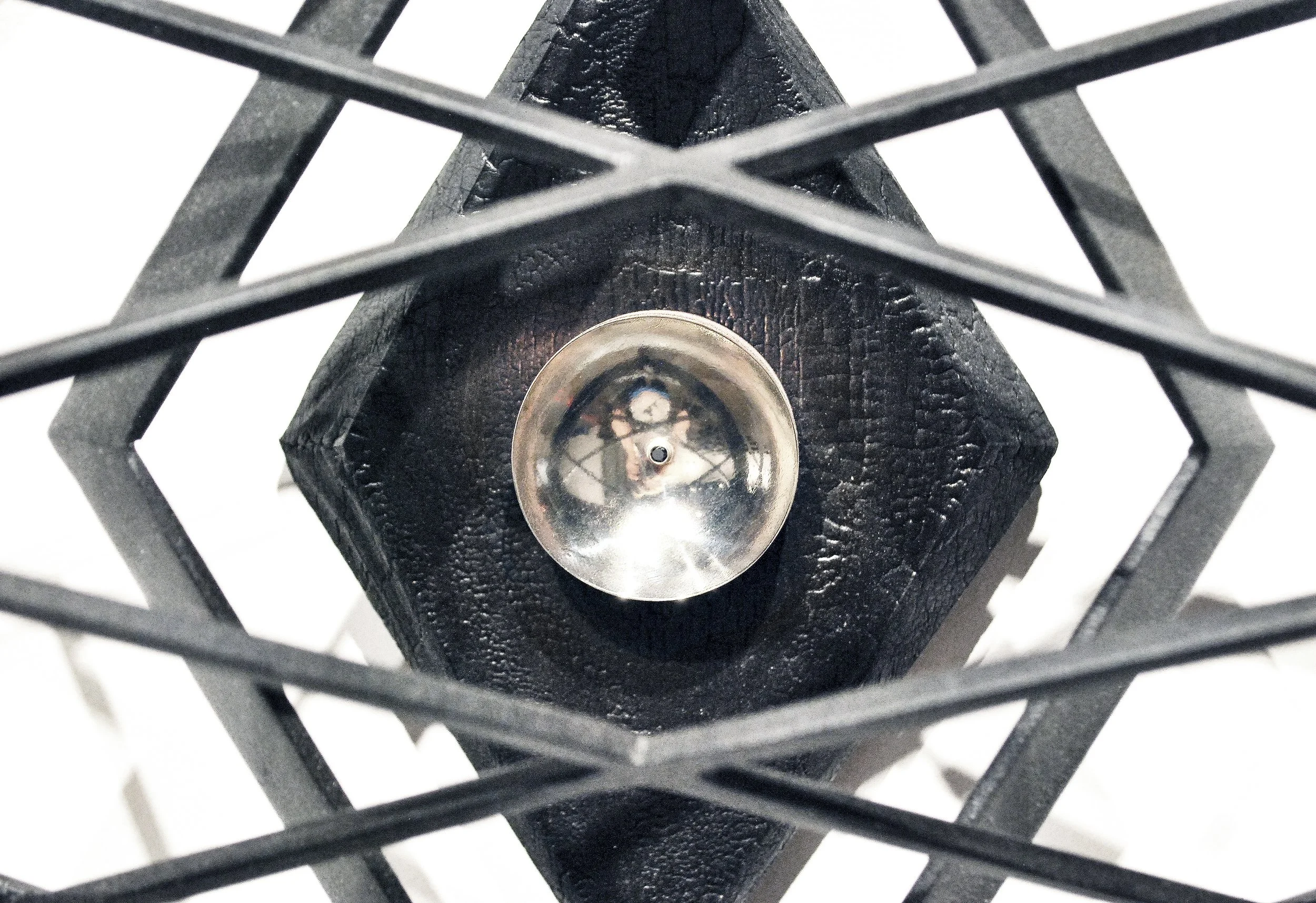
“Parabolic Reflector”
Welded steel, wood, silver, cubic zirconia.
Inspired by the optics of telescopes and observational instruments, this work explores how visual information is received, distorted, and reconstructed. At its center is a hollow fabricated silver form, polished to a mirror finish and backed with copper. A faceted black cubic zirconia is positioned at the focal point where reflected light converges, inverting and reversing the surrounding environment.
The surrounding steel framework references the armatures of space telescopes and fractures planes in space. As the viewer moves, these forms shift within the reflection, emphasizing the instability of perception. The reflective centerpiece also alludes to the human iris and the biological mechanics of sight itself—where incoming light is inverted before being corrected by the brain. Through reflection and spatial distortion, the work examines perception as an active construction rather than a fixed reality.
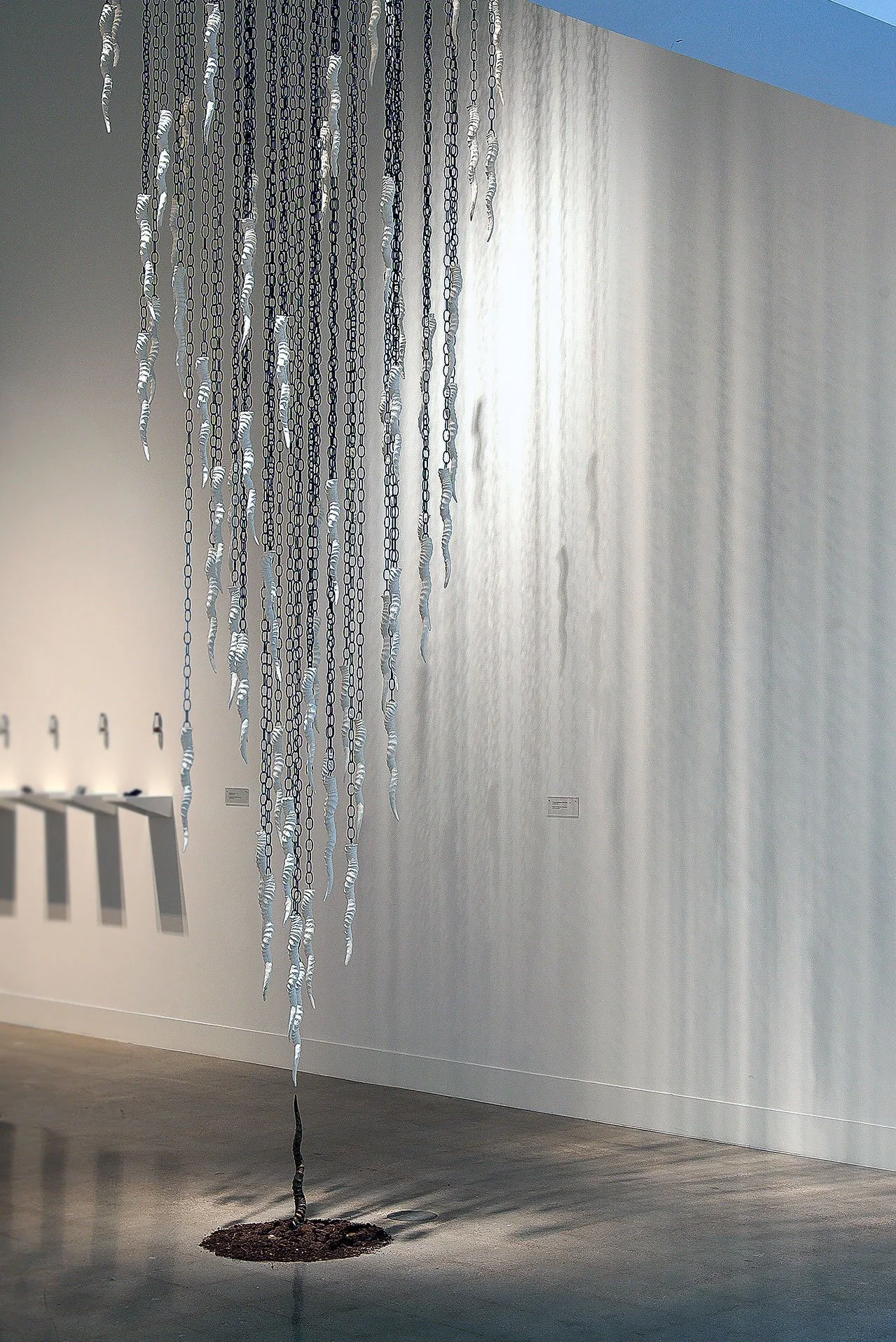
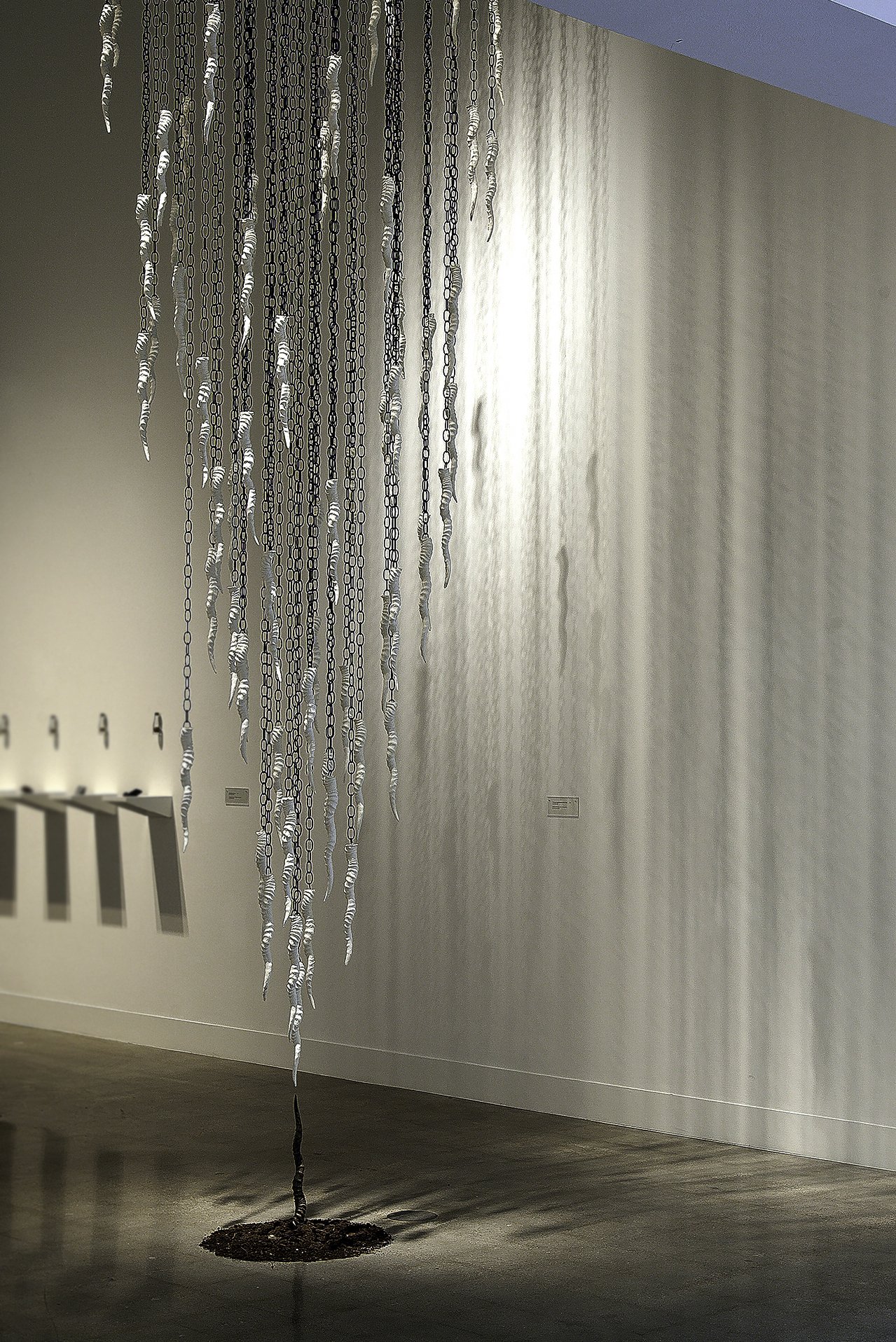
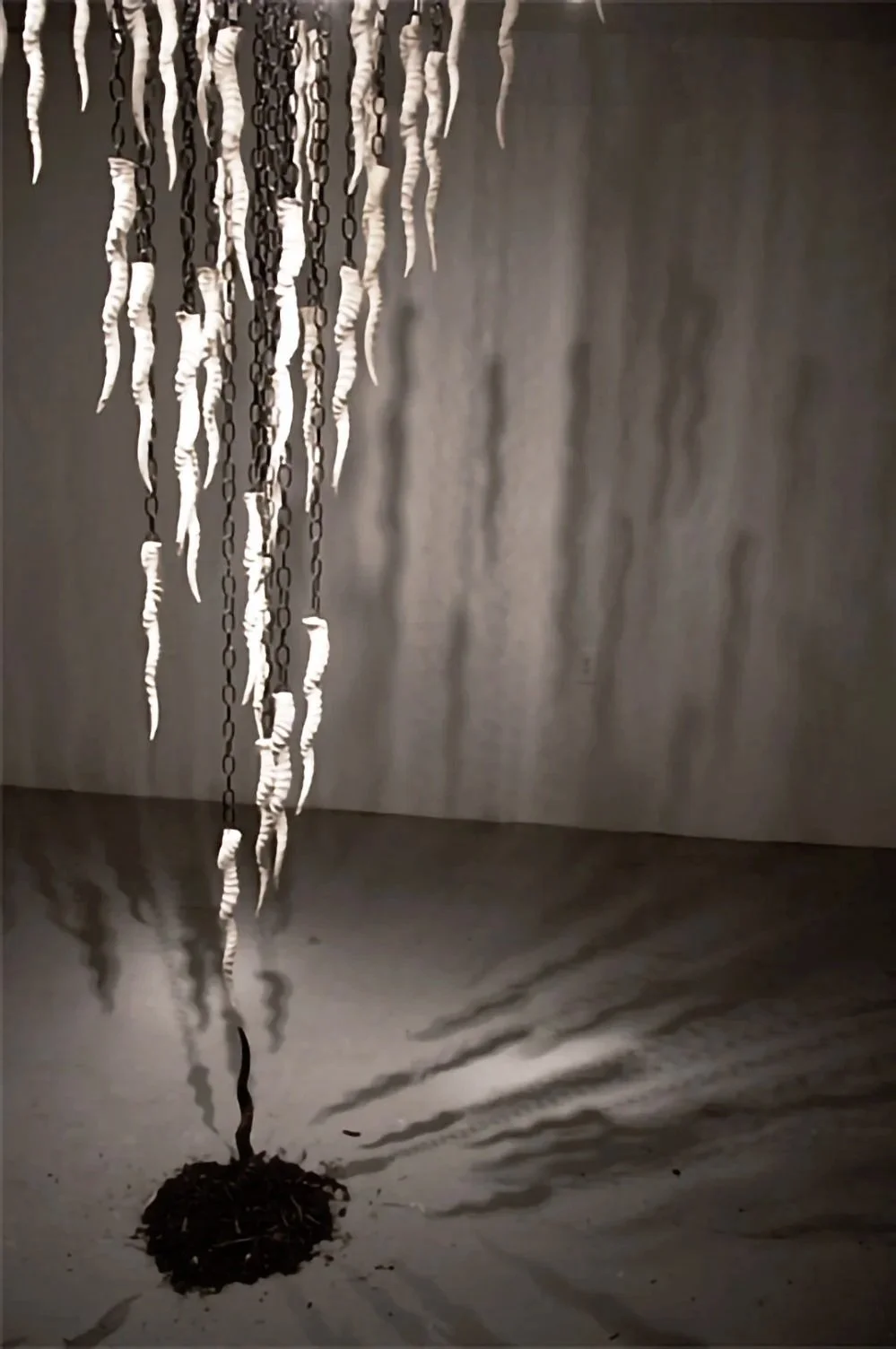
“Index of the Departed”
Plaster, Chain, Blackbuck Horn
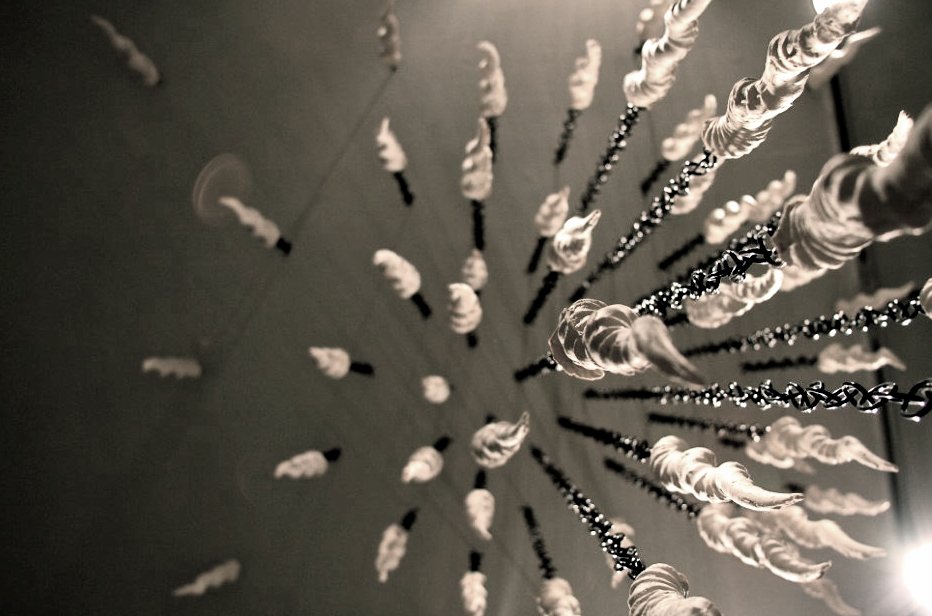
Inspired by Annie Dillard’s The Wreck of Time, this installation considers the fragility of individual existence within the overwhelming accumulation of death across time. Suspended ceramic forms hover above a single horn emerging from the ground, appearing simultaneously as replications, echoes, and remnants.
The suspended forms function as echoes or residual impressions—multiplying beyond the singular body they originated from. Through isolation, scale, and spatial fragmentation, the work examines the instability of individual significance against the immeasurable accumulation of lives that precede us.
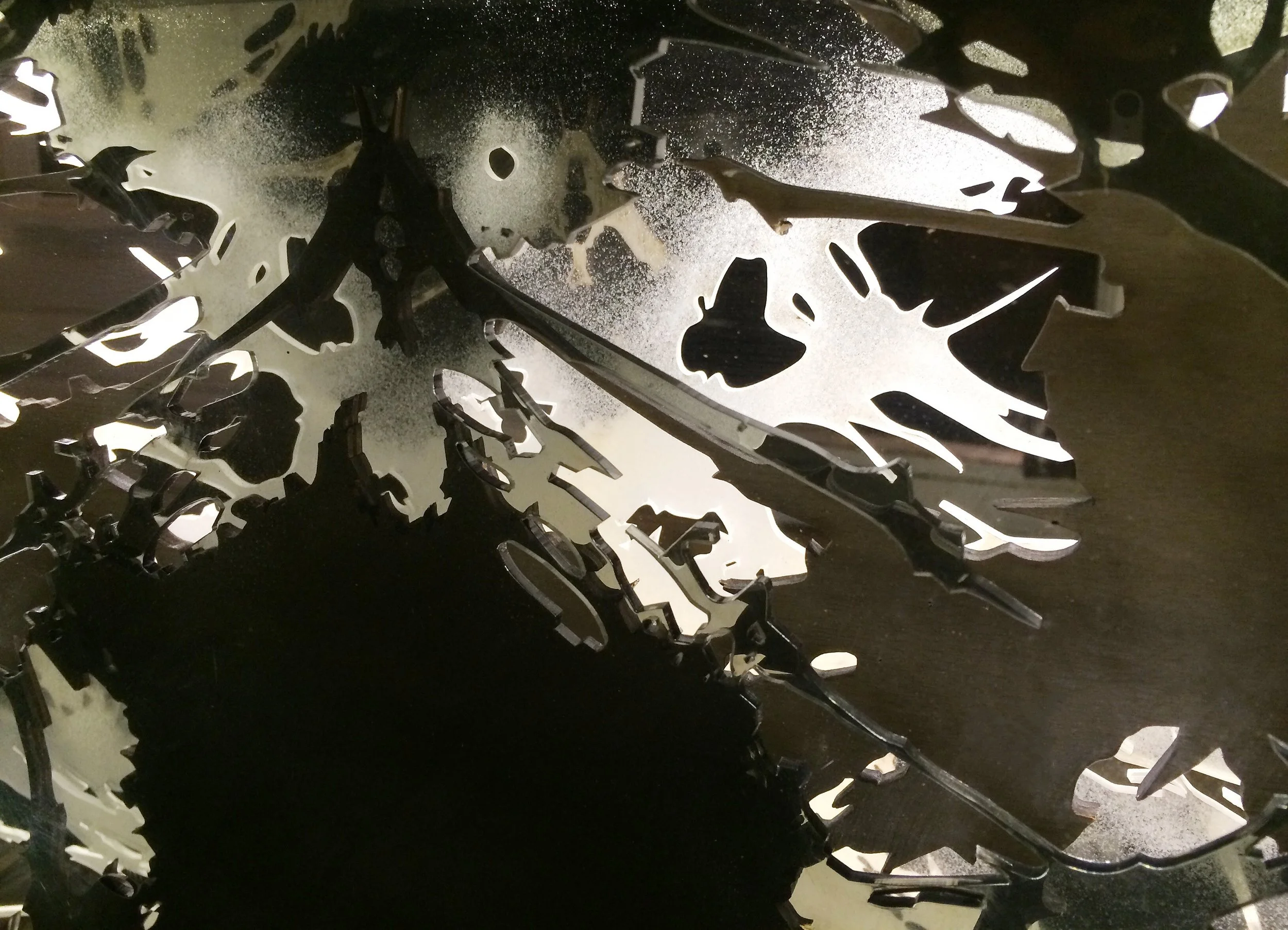
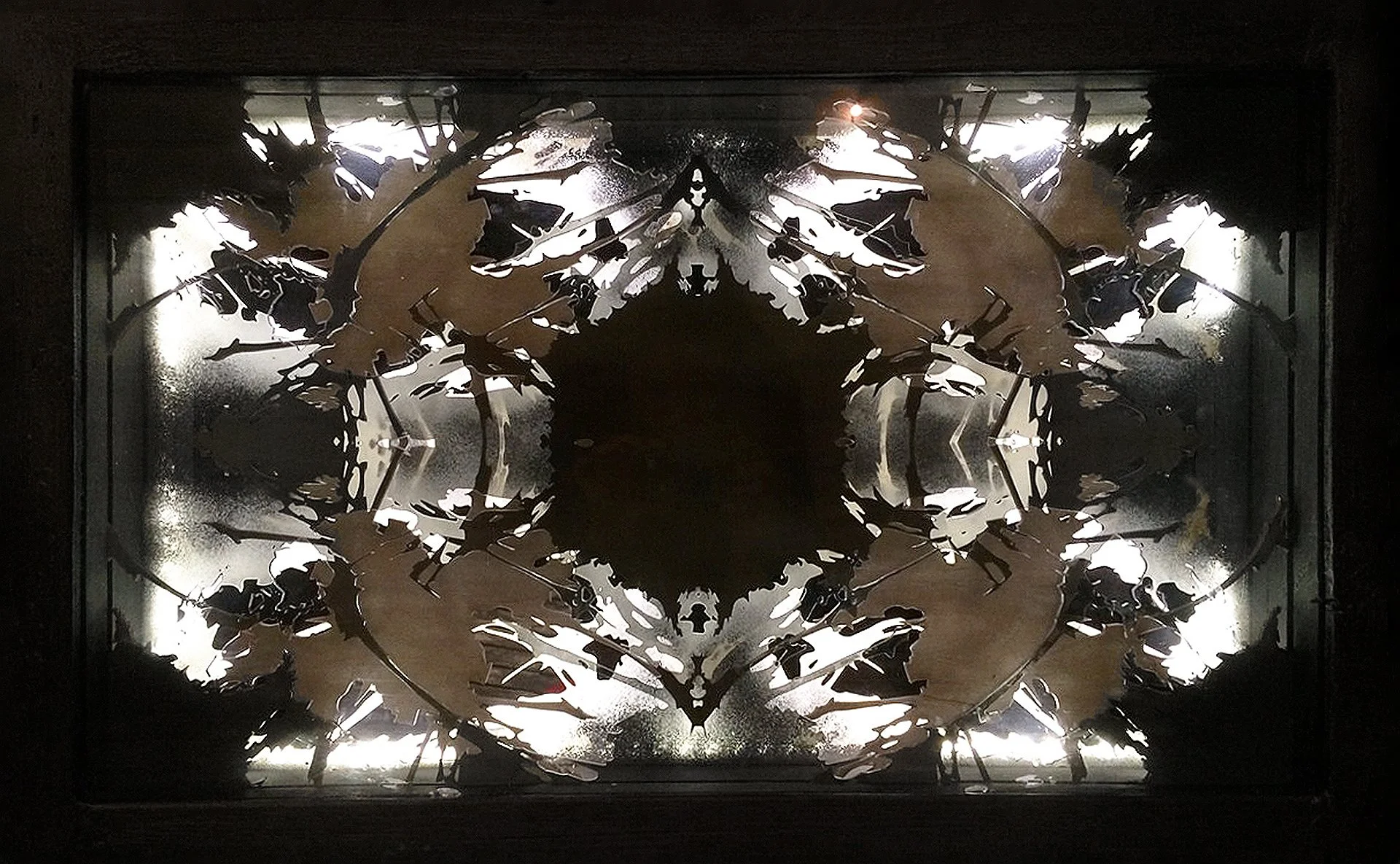
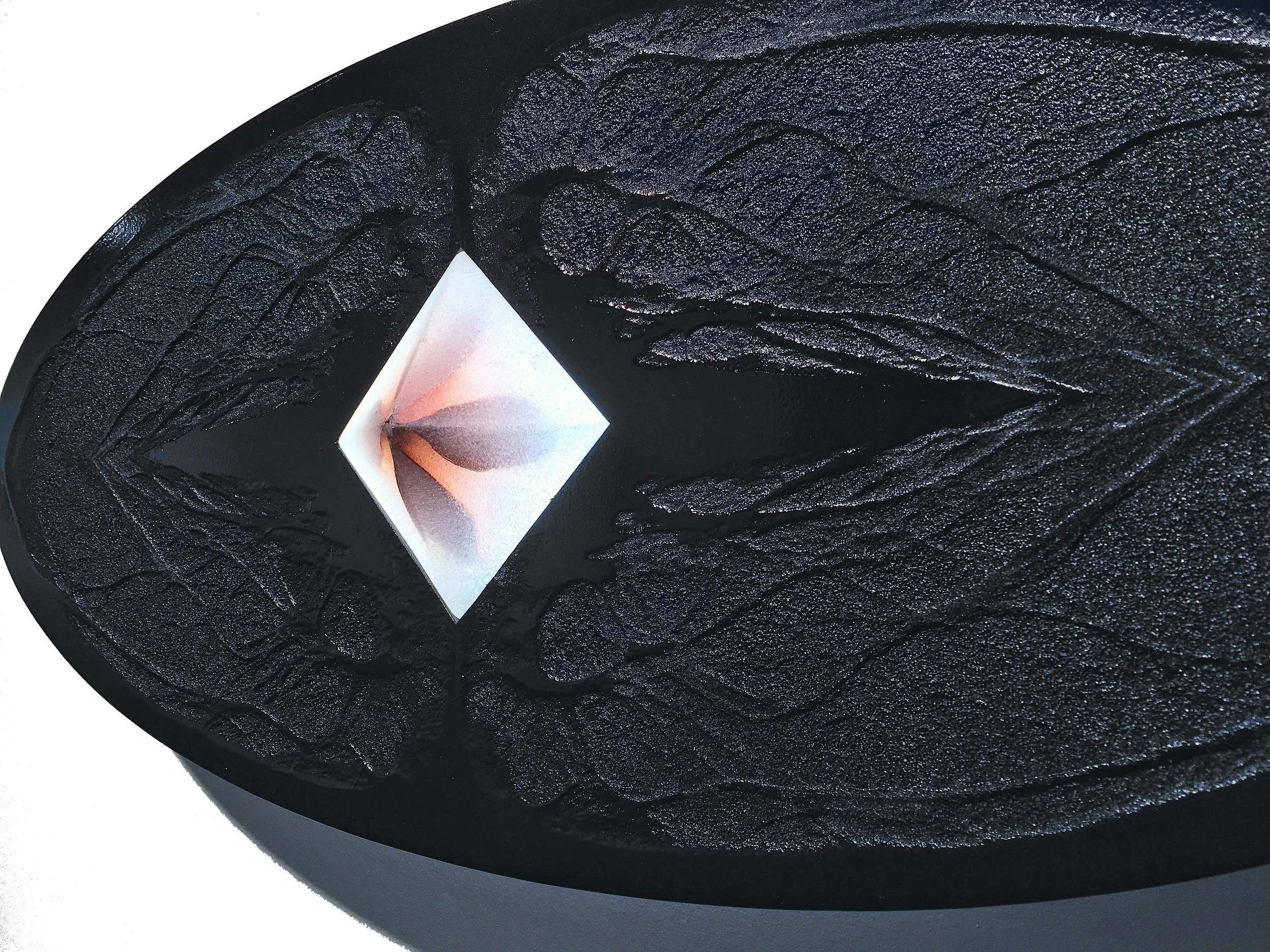
“Aether Membrane”
Wood, Acrylic, LEDs
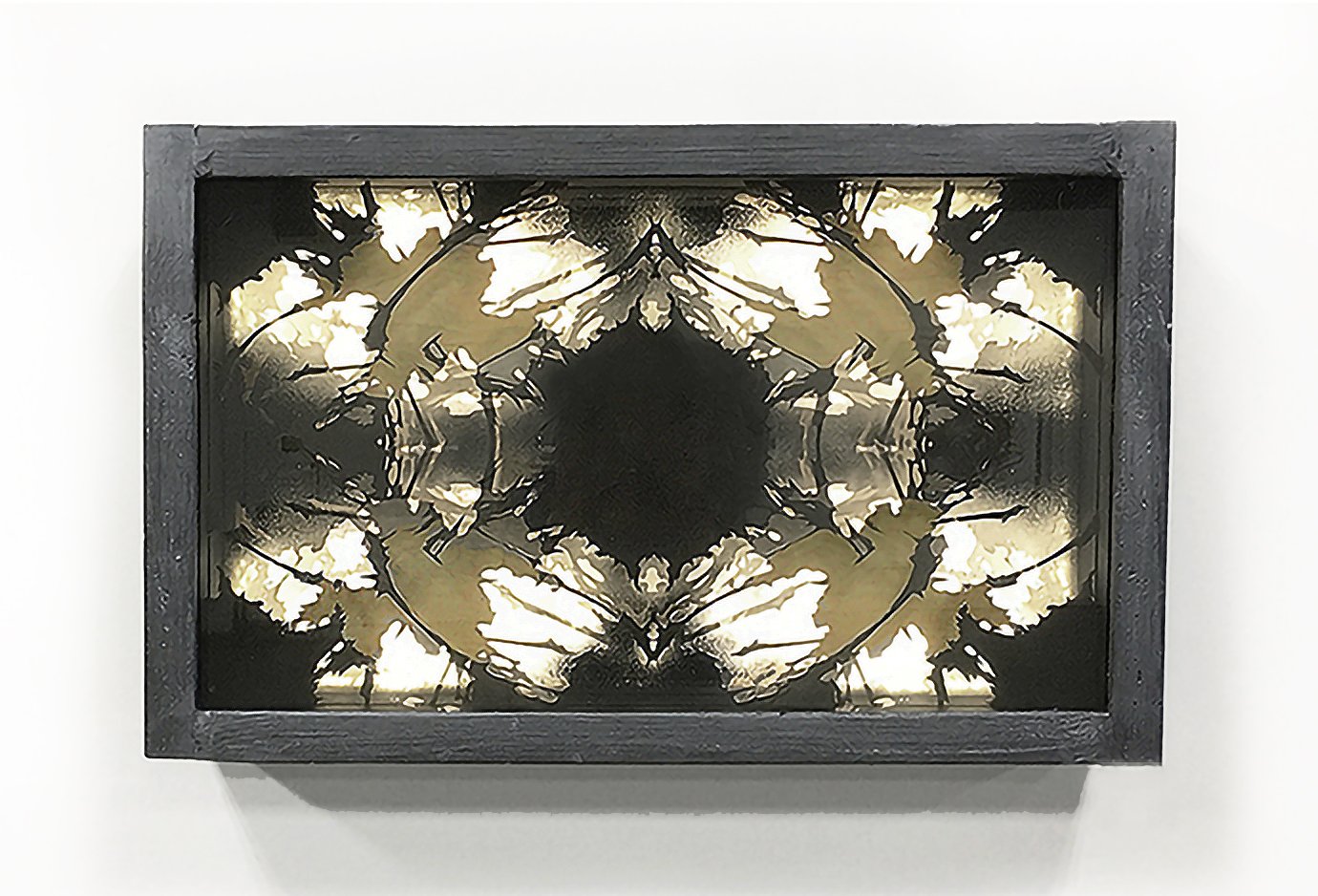
Aether Membrane generates a shifting optical field that changes according to the viewer’s position in space. Mirrored forms repeat and reorganize through light, oscillating between celestial structures, biological systems, and psychological projection.
The work examines perception as an unstable process in which meaning is continuously constructed through reflection, distortion, and spatial relation.